


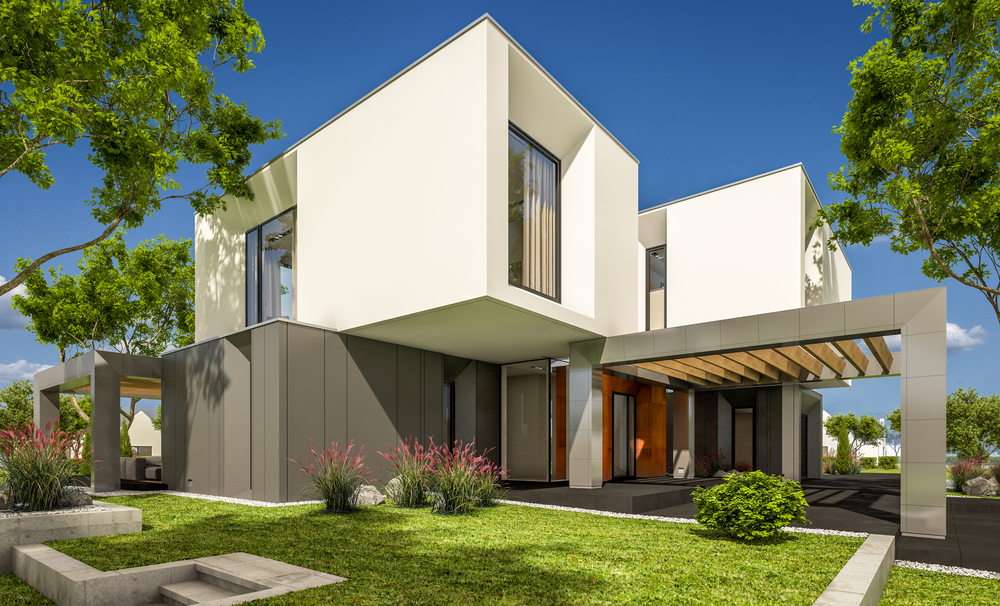
Choosing the final architectural style for a new build is the most critical decision in any construction project. It’s the moment where abstract dreams must solidify into a tangible vision, defining everything from the emotional feel of the structure to its long-term market value. Think of it this way: you wouldn’t buy a custom suit after only seeing a fabric swatch; you need to know the fit, the drape, and the tailoring. Yet, for decades, significant architectural commitments were made based on flat drawings that simply can’t convey the texture, depth, or ambiance of a finished building.
That is why working with a professional 3d exterior rendering company is no longer a luxury, it’s an essential part of risk mitigation and creative clarity. By leveraging advanced visualization technology, particularly a top-tier 3d exterior renderings service, architects and clients can definitively select a style, compare entirely different aesthetic concepts side-by-side, and achieve absolute certainty before any dirt is moved on site. This process transforms a subjective decision into an objective, verifiable one, ensuring the enormous investment in a new building aligns perfectly with the initial vision.
The High Cost of Guesswork: Why 2D Blueprints Fail Style Selection
Have you ever tried to describe the color “teal” to someone who has never seen it? That’s what it feels like to finalize an architectural style using only 2D blueprints, simple sketches, or even carefully curated mood boards. These traditional tools are indispensable for the engineering and construction phases, certainly, detailing where walls and pipes go. But when it comes to capturing the feeling of a style, the way the brick pattern hits the light, or the subtle warmth of the cedar siding, they fall woefully short. They demand a profound imaginative leap from the client – a leap that often fails.
When that leap fails, the results can be catastrophic. We’ve all heard the horror stories: the client who approved the design but hated the finished look because the windows seemed too small, or the stone appeared “flat” and lifeless. These aren’t minor issues; they lead to expensive change orders, project delays, and immense emotional frustration. Why risk significant financial loss, perhaps tens of thousands of dollars or more, because a simple line drawing couldn’t adequately convey the richness of a chosen material? The risk is just too high to continue playing the guessing game, and that’s precisely why high-quality 3D visualization has become the standard for definitive style selection.
Bridging the Imagination Gap: From Concept to Photorealism
This is where the transformative power of fidelity comes into play. A high-quality 3D exterior rendering service doesn’t just produce a pretty picture; it delivers a photorealistic simulation that eliminates ambiguity for all stakeholders involved. We are talking about hyper-accurate visual data, not just an illustration. These visuals are achieved through sophisticated rendering techniques that meticulously replicate real-world physics.
Crucially, natural light (sun path) simulation is key. It’s the light that gives a structure its character, and the quality of the render must show how shadows will be cast across the façade at 4:00 PM in the summer, or how the glass will reflect the winter sky. Furthermore, the visuals must depict the actual depth of textured materials. The subtle imperfections in weathered wood, the gritty surface of stucco, or the smooth, reflective finish of poured concrete, all are rendered with meticulous detail, allowing you to feel the difference between a rough-hewn Modern Farmhouse aesthetic and the smooth surfaces of Classical Minimalism. When a client sees their proposed style represented this faithfully, their confidence is immediately cemented, ensuring that when the building is finished, there are no unwanted surprises.
The Power of Concept Comparison: Iterating Design in the Digital Sandbox

The greatest asset of digital visualization is not just viewing one design; it’s the ability to compare multiple concepts flawlessly. It permits us to be creatively bold and intellectually rigorous. You can task your team to develop two or three completely distinct design aesthetics – a Contemporary Scandinavian concept versus a Traditional Georgian concept, for example – and then instantly view them set on the identical piece of land, under the same lighting, and against the same surrounding foliage.
This rapid-fire iteration process is fundamentally impossible with physical models or traditional drawings, which take weeks to revise. But with 3D technology, the discussion shifts from “I wonder what that would look like?” to the decisive question of “Which of these two styles is the definitive choice for this location?” The focus is on efficiency and stylistic clarity, giving you the visual evidence you need to move forward with unshakeable conviction. This level of exterior architectural rendering services enables a design dialogue that is informed, fast, and ultimately far more satisfying for everyone involved.
Mastering Massing and Form: Validating the Architectural Skeleton
Before you worry about the paint color, you have to get the fundamental shape right. Massing refers to the overall shape, bulk, and three-dimensional arrangement of the building’s volumes, essentially the structure’s architectural skeleton. Every style has its own principles of massing: traditional styles often use an additive approach, combining smaller, articulated forms to create a comfortable human scale, while modernist styles frequently employ a subtractive method, carving voids and recesses from a large, monolithic block.
You must validate these proportions and scale early on, and 3D renderings are essential for that validation. If the massing is wrong – if the roof pitch is too shallow for a French Colonial or the window scale is too small for a contemporary home – no amount of beautiful cladding will save the design.
Utilizing 3d architectural exterior rendering services means you can digitally manipulate the height, depth, and placement of volumes, ensuring the fundamental framework honors the spirit of the chosen style before expensive structural decisions are finalized. This validation process ensures that the building’s form perfectly communicates the intended aesthetic.
The Definitive Style Variables: A Side-by-Side Analysis

Once the core massing is approved, the attention turns to the surface elements—the details that truly dress the building and solidify the style identity. This is where the side-by-side comparison capability of the exterior 3d renders becomes incredibly potent. It’s a precise analytical tool that allows for instant swaps of major stylistic components.
We use this capability to create precise visual variations that isolate the style-defining elements. The 3d exterior design rendering services studio can quickly render two or three options where the structure and massing remain the same, but the finishes change completely. Here are the key components that the 3d exterior rendering service allows you to swap out and visualize clearly for comparison:
- Cladding Material: Comparing the visual impact of deep red brick, smooth white stucco, rustic wood siding, or modern composite panels. The difference in texture is critical.
- Color Palette: Testing different primary, secondary, and accent color schemes on the facade to see how they affect the overall mood.
- Window and Door Frames: Visualizing the difference between thick, dark aluminum frames (Modern) and thin, light-colored wood frames (Traditional) to gauge their effect on the facade’s visual weight.
- Roofing Style: Switching between flat, clean-line roofs, steeply pitched gables, or elegant hip roofs to ensure consistency with the selected architectural style.
We are talking about visual clarity so sharp that it replaces costly physical samples and prevents future regret. This focused comparison ensures that every surface-level decision reinforces the stylistic intent without a single ambiguity. This is where art meets precision project management.
The ROI of Certainty: Mitigating Risk Before Mobilization
Let’s shift gears and talk business. The primary benefit of investing in detailed 3D visualization is a profound Return on Investment (ROI) rooted in certainty. When you work with a professional exterior architectural rendering services provider, you are buying insurance against chaos. Why? Because the most expensive aspect of any building project is change once construction has begun.
Every change order, every material swap on site, costs exponentially more in terms of time, labor, and materials than an adjustment made digitally. By committing to a style and finishes with high-quality 3D comparison visuals before mobilization, you virtually eliminate these crippling mid-project modifications. This directly translates into massive cost reductions and substantial time savings, dramatically shrinking feedback and approval cycles.
Once the design is approved, the hyper-realistic visuals from the 3d exterior rendering studio become immediate, decisive, enhanced marketing/pre-selling capabilities. You can start selling or leasing the property with complete confidence, months before construction is even finished, accelerating your capital returns.
Conclusion: The Foundation of Confidence
We’ve established a clear truth: relying on two-dimensional representations to make definitive, high-stakes style choices is a gamble with your money, your schedule, and your peace of mind. The ability to see, compare, and validate every stylistic element, from the large-scale massing and form down to the precise material texture, is the critical function of modern architectural visualization.
By providing unparalleled clarity, side-by-side style comparison, and accurate simulation of light and materials, the digital sandbox removes the speculation inherent in traditional design. This process transforms the definition of architectural style from a subjective struggle into a disciplined, data-informed choice. Ultimately, partnering with a 3D exterior rendering service transforms a potentially chaotic construction project into a foundation of absolute confidence before the first shovel hits the ground, ensuring your finished building is exactly as magnificent as you envisioned.
0
Related
Read the full article here