






We love hanging planters. You can put them in the smallest of spaces – you don’t even need a garden – and they add height and interest to any outdoor space. You can also use them indoors for house plants. They require a little effort to get them set up properly, and you’ll also need to do a small amount of maintenance to keep them looking their best. Here’s what to do.
Best plants for indoor hanging planters
The nice thing about indoor hanging planters is that you can be really creative with your container. Baskets, polished metal, even glass – after all, it doesn’t have to be weatherproof. Most plants that thrive in indoor hanging planters are from warmer climates, and will need careful positioning. Don’t put them too near a radiator, or a draughty window. They’ll need to stay at a fairly constant temperature in a bright, sunny position.
If you want something super-easy, then step forward Chlorophytum comosum – better known as the spider plant. These don’t need a lot of maintenance and will generally thrive indoors, throwing out little baby plants on the end of long roots.
Another easy choice is Epipremnum aureum, rather delightfully known as devil’s ivy. It has lovely variegated leaves and unlike many houseplants will tolerate some shade. It prefers dry conditions, so don’t keep it too damp.


The Asplenium nidus or bird’s nest fern has bright, upright, crinkly leaves and looks lovely mixed with trailing plants in a large planter to give an impression of height. It’s a rainforest plant so prefers a bright position out of direct sunlight, and damp soil.
Best plants for outdoor hanging planters
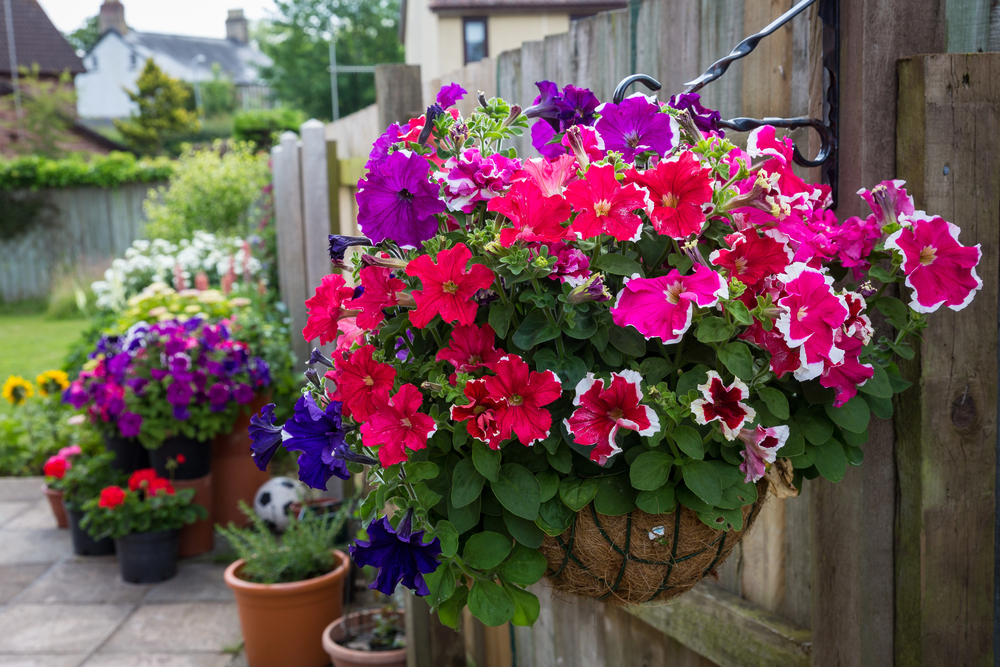
Outdoor hanging planters can either be seasonal, adding colour and interest to a spring or summer garden, or permanent. If the latter, it’s harder to keep the plants looking good all year round and you’ll probably end up with only evergreens, which don’t always look that interesting. You could try planting up with mostly trailing evergreens such as ivy, creeping jenny and creeping rosemary, then adding a few annuals in in season.


If you want the best of both worlds, then fuchsias make a great choice. Choose a compact trailing variety which will produce extravagant blooms. They’re semi-hardy perennials, so will come back year after year. You’ll need to over-winter them, though, or they’ll succumb to harsh frosts. Remove the plant from the hanging planter and pot it up. Put it in a garage or basement where it will be protected from frost, and only water it once the soil is completely dry to the touch. This will put the plant into a state of dormancy, and it will look dead. Bring it outside in the spring and replanting it the hanging container, though, and it should soon display signs of coming into leaf.
If you’re after a budget friendly and impressive block of colour, then lobelia will do the job perfectly, It can be bought cheaply as small plugs and produces clouds of white, pink or blue flowers during the summer months. Lobelia is an annual, so once it’s finished flowered dig it out and add it to the compost.


Geraniums are probably the best known hanging planter, and they’re popular for a reason. They’re hardy and drought-tolerant, so will manage if you forget to water them for a day or two. They come in a range of colours from white to bright red, and also in upright and trailing (ivy) varieties. Both are suitable for planting in hangers, depending on the look you want to achieve.
Geraniums are also semi-hardy perennials. To over-winter them, remove from the hanging container preserving as much of the rootball as possible. Put them into smaller pots with some fresh compost, and prune the plant by about a third, removing an dead or damaged leaves. Put them in a bright, frost-free place. They won’t go into complete dormancy, so continue to water them throughout the winter, enough to keep the soil damp. Put them back outside in spring once the danger of frost is past.
0
Related
Read the full article here


