








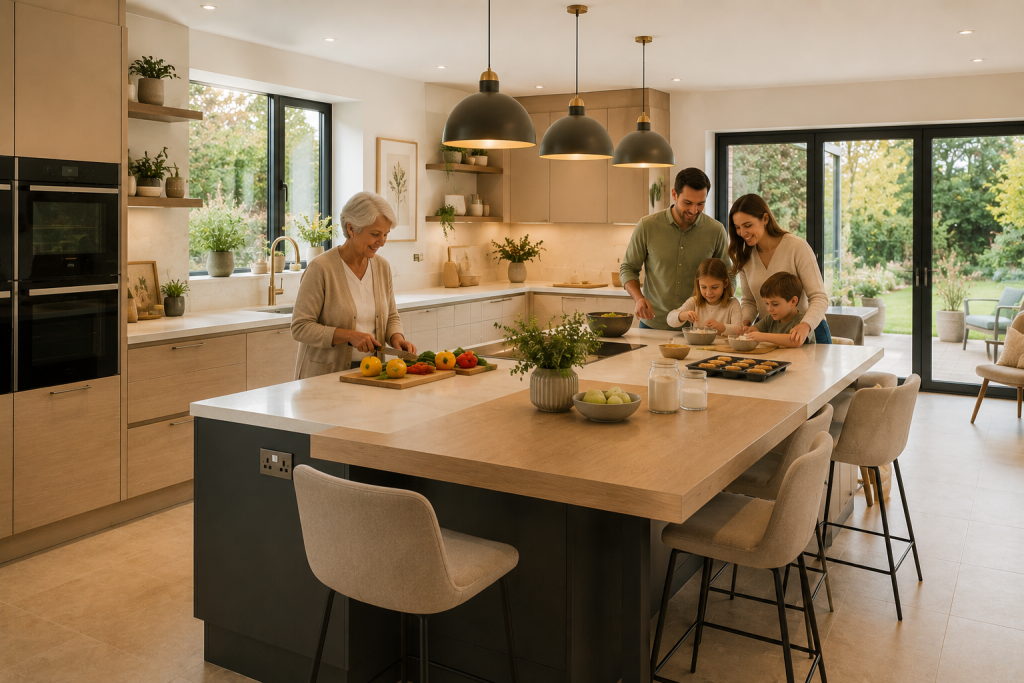
Multigenerational living has quietly become one of the more interesting design briefs of the last several years. Families are combining households more often, whether that means an aging parent moving into an adult child’s home, an adult child moving back in to help care for a parent, or a household that was always designed to hold three generations under one roof. The design challenge is real: how do you create a home that genuinely works for a toddler, a working adult, and an aging grandparent without any of them feeling like the space was designed around someone else’s needs.
Good design solves more of this than people expect, but not all of it. A beautifully laid out home still benefits enormously from the right in-home support, particularly when an aging family member needs more consistent care than family members can realistically provide alongside their own jobs and children. Working with an agency like Friends & Family Home Care alongside a thoughtful renovation tends to produce a household that actually functions, rather than one that looks right in photos but creates daily friction.
Design Choices That Actually Reduce Friction
The most successful multigenerational layouts give the older generation a genuinely private zone, not just a bedroom, but ideally a small sitting area or reading nook that offers a break from the noise and energy of a full household. A ground-floor primary suite with its own bathroom removes the need to navigate stairs multiple times a day, which matters more for long-term comfort than almost any finish or fixture choice.
Kitchen and bathroom details deserve particular attention in these layouts. A single step-free shower entry, comfort-height toilets, and counters at a workable height for someone using a wheelchair or walker cost very little extra during initial construction but avoid an expensive and disruptive renovation later. Good acoustic separation between the shared living spaces and a private suite also matters more than people expect, since noise from young grandchildren can be exhausting for someone who needs more quiet rest than the rest of the household.
The Growing Demand Behind This Design Trend
This shift in how families design their homes tracks closely with a broader shift in how care is delivered. Home health and personal care aides are now the largest single occupation in the United States, a workforce that increasingly operates inside multigenerational homes rather than separate facilities.
| Metric | Figure |
|---|---|
| Home health and personal care aides, current US workforce | ~4.3 million |
| Projected growth rate (2024 to 2034) | 17% |
| New home care jobs projected this decade | 681,000+ |
| Caregiver turnover rate (2024) | 75% |
A caregiver visiting a multigenerational home regularly benefits from many of the same design choices that make the space work better for the family itself: clear sightlines, a workable kitchen, and a private suite that gives them room to help without disrupting the rest of the household’s routine. For more ideas on how property choices shape these outcomes, our Property section covers related considerations worth weighing when a home needs to serve more than one generation at once.
Getting the Family Conversation Right Alongside the Design


The best multigenerational renovations start with an honest conversation about who needs what, rather than a designer’s assumptions about what an aging parent’s suite should look like. Some parents want maximum independence and minimal interaction with the household’s daily chaos. Others want to be right in the middle of it, close to grandchildren and family life. The layout should reflect the actual person moving in, not a generic template.
It also helps to plan for change rather than a fixed snapshot of current needs. A suite designed with future accessibility in mind, wider doorways, reinforced bathroom walls for grab bars down the line, avoids a second disruptive renovation a few years after the first one wraps up.
A Home That Grows With the Family Inside It


Multigenerational design succeeds when it treats every resident’s needs as equally important, rather than optimizing for the household’s youngest or most able-bodied members by default. Paired with the right caregiving support, a well-designed multigenerational home can genuinely work for everyone inside it, for longer than most families initially expect.
0
Related
Read the full article here


