





If you are lucky enough to have a generous plot, you will know that a bigger garden brings a wonderful sense of possibility, along with a few design puzzles of its own. Wide open space can either feel like a blank canvas or, if it is left unplanned, a bit like an unused field. The trick is to break the area down into purposeful zones, so that every part of the garden earns its keep. Here are some ideas to help you make the most of a larger outdoor space.
Zoning Your Space
One of the biggest differences between designing a small garden and a large one is the need for zoning. Rather than treating the whole plot as a single scene, think of it as a series of connected rooms, each with its own purpose. You might have a formal seating area close to the house, a productive kitchen garden further along, a wildlife friendly meadow at the far end, and perhaps a woodland style corner for shade loving plants.
Hedging, trellis panels, pergolas and changes in level can all be used to separate these zones without closing the garden off completely. Glimpses through an archway or along a mown path give a sense of intrigue and encourage you to explore the whole plot, rather than viewing it as one flat expanse.
Pathways and Movement


In a large garden, how you move through the space matters just as much as what you plant in it. A meandering path, whether gravel, stone or simply a mown strip through longer grass, gives structure to the garden and guides visitors on a journey rather than letting them cut straight across.
Curved paths tend to suit larger, more naturalistic plots, while straight formal paths work well nearer the house where a tidier, more structured look is often wanted. Wherever possible, plan your paths to lead somewhere interesting, whether that is a bench, a specimen tree or a quiet spot to sit with a cup of tea.
Planting on a Bigger Scale


Smaller gardens often rely on a handful of carefully chosen plants, but a larger plot allows you to think in terms of drifts and blocks of planting. Repeating the same grasses, shrubs or perennials in generous groups, rather than dotting single plants about, creates a much calmer and more cohesive look.
Trees also come into their own on a bigger property. A well placed specimen tree can anchor a whole area of the garden, provide welcome shade in summer, and give height and structure through the winter months when herbaceous planting has died back. If you are planning a new border, it is worth sketching out the layout first and thinking about how it will look from the house as well as from within the garden itself.
Water Features and Focal Points


Larger gardens have the space to accommodate water features that would simply overwhelm a smaller plot. A pond, a stream running through a rockery, or even a simple reflecting pool can bring movement, sound and wildlife into the garden. Water has a wonderful way of drawing the eye and creating a natural focal point, particularly when it is positioned so it can be seen from a seating area or a window inside the house.
Beyond water, think about other focal points too. A striking piece of garden sculpture, an obelisk covered in climbing roses, or a beautifully crafted arbour can all give the eye somewhere to rest as you look out across a large expanse of lawn or planting.
Keeping a Larger Lawn Looking Its Best


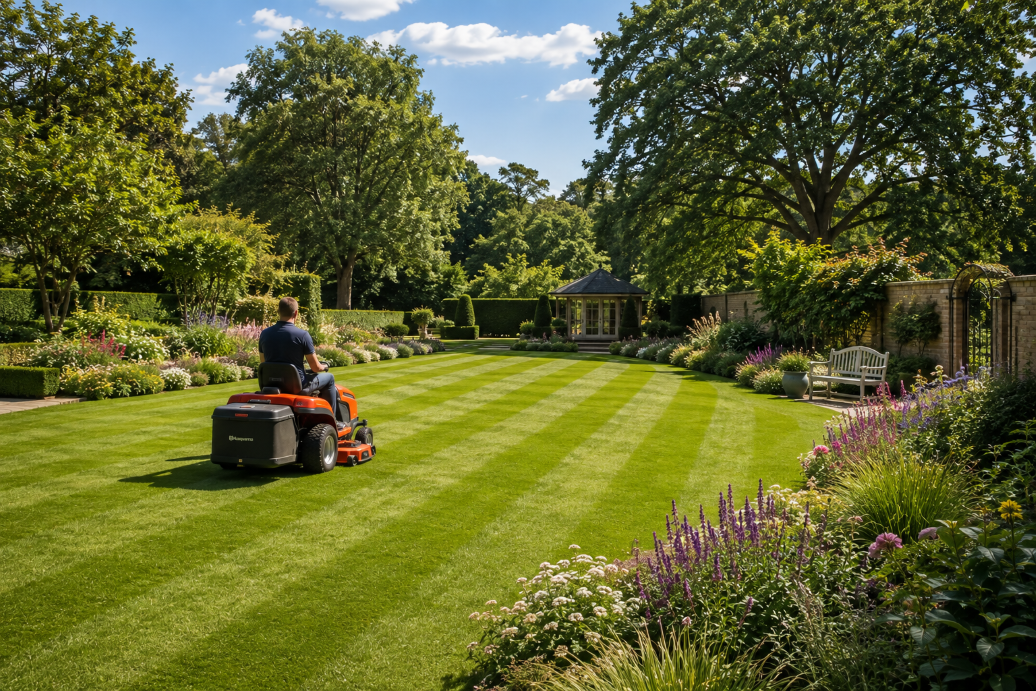
A generous lawn is one of the great pleasures of a larger property, giving you space for games, picnics and simply enjoying the view. It does, however, take a little more thought to maintain than a modest patch of grass. Regular mowing, edging and feeding all become bigger jobs as the square footage increases, so it is worth thinking early on about how you will keep on top of the work.
For sizeable plots, many homeowners find that ride-on lawn mowers make a real difference, cutting down the time and effort needed to keep a large lawn neat and tidy throughout the growing season. Choosing the right equipment for the size and shape of your garden means you can spend less time on maintenance and more time actually enjoying the space you have created.
Garden Rooms and Outbuildings

Finally, do not overlook the potential for garden buildings on a larger plot. A garden room can serve as a home office, studio or simply a peaceful retreat away from the main house, while a well designed greenhouse or potting shed gives keen gardeners somewhere to potter throughout the year. Position these buildings thoughtfully, taking account of sunlight, views and how they will be approached, so they feel like a natural extension of the garden rather than an afterthought.
A larger garden is a real privilege, and with a little planning it can become a series of beautiful, useful spaces rather than one overwhelming stretch of grass and borders. Take your time, work zone by zone, and you will end up with a garden that is both a joy to look at and genuinely easy to live with.
0
Related
Read the full article here


