







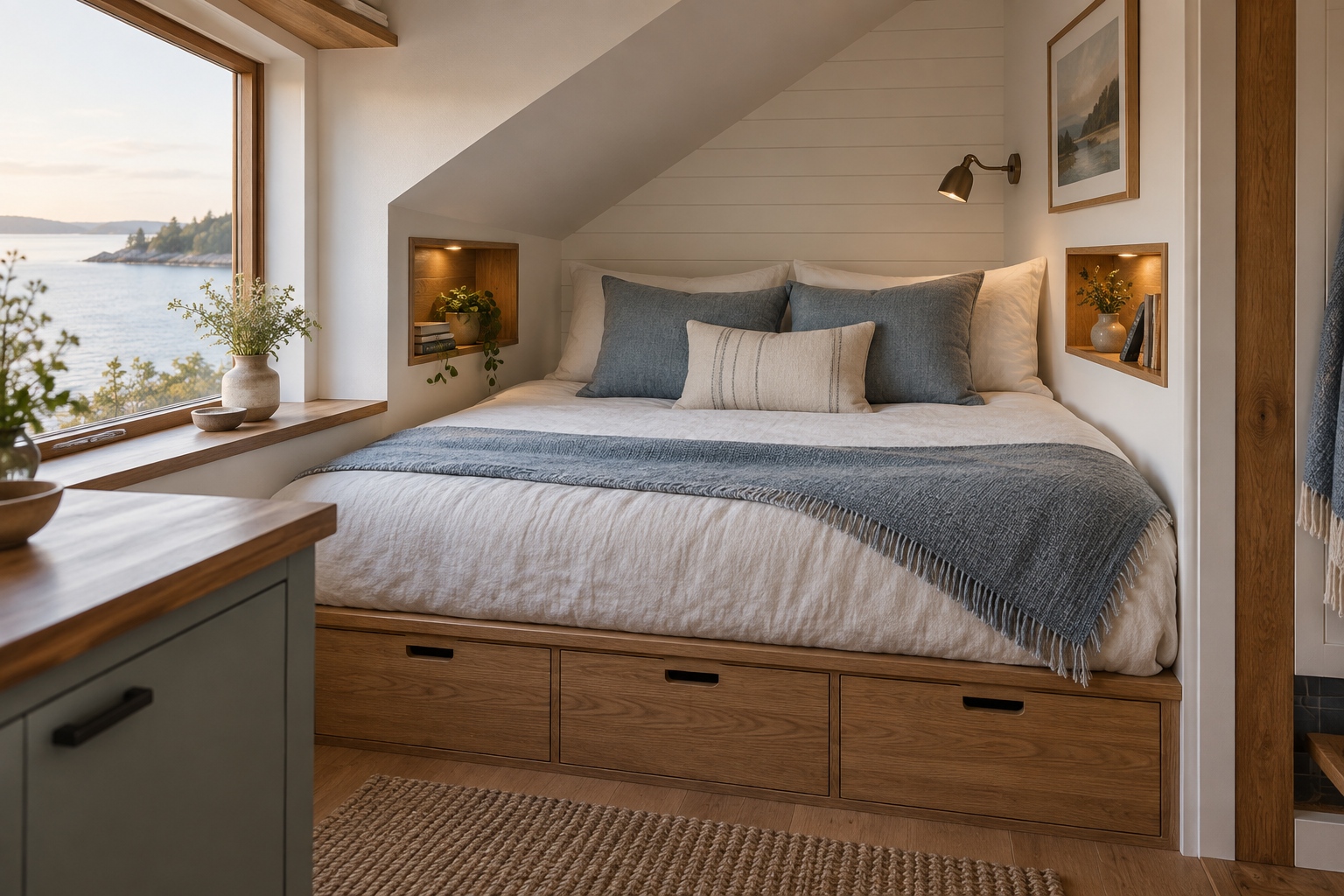
Living in a tiny house changes how you think about almost everything, and your mattress is no exception. You’re working with limited square footage, tighter layouts, and furniture that often has to do double duty. In places with compact coastal homes and relaxed design trends, like Huntington Beach, practical comfort matters even more. A mattress in a small home can’t just feel good for one night. It needs to fit your space, your sleep habits, and your daily routine without creating a bulky headache.
Shop locally when fit and feel are hard to judge online
Buying a mattress online can be convenient, but tiny house layouts make in-person testing especially useful. You’re not just evaluating softness. You’re checking dimensions, profile, edge support, and whether the mattress suits a compact setup.
If you’re comparing options in Southern California, visiting a Huntington Beach mattress store can help you test different constructions and talk through sizing for smaller homes. That local context matters when humidity, coastal temperatures, and compact modern living all play into mattress performance.
A knowledgeable showroom team can also help you figure out whether a custom size, low-profile design, or specific support system makes more sense than a generic boxed mattress. For tiny homes, practical guidance often beats flashy ad copy.
Why mattress choice matters more in a tiny house
In a standard home, a mattress can be just another bedroom purchase. In a tiny house, it becomes part of your floor plan. It affects storage, movement, airflow, and even how open your interior feels.
A mattress that’s too tall can make loft access awkward. One that’s too wide can crowd built-in shelves or block a walking path. If your bed converts into seating, the wrong model can turn a clever layout into a daily wrestling match.
Comfort still counts, obviously. You’re not trying to “minimalism” your way into back pain. But in a compact home, comfort and function need to work together. That means thinking beyond softness or firmness and looking at size, weight, and how the mattress behaves in a small-space setup.
Start with your exact floor plan, not mattress marketing
Mattress shopping gets weird fast once you enter the land of “cooling layers,” “zoned support,” and names that sound like sci-fi upgrades. Before any of that, measure your actual sleeping area carefully.
Check the platform length and width, but also note ceiling height, wall clearance, and any corners the mattress has to pass through during delivery. In lofted tiny homes, a mattress may need to bend or compress enough to get upstairs. That detail can save you from a dramatic stairway standoff.
If your home includes built-ins, folding frames, or under-bed drawers, measure around those features too. Even a difference of two inches can affect whether storage opens properly or whether bedding constantly snags on surrounding surfaces.
Pick the right mattress size for compact living
Bigger doesn’t always mean better when every square foot has a job. In many tiny homes, a full or queen works best, but the ideal size depends on how you use the surrounding space.
A twin or twin XL can work well for solo sleepers, daybeds, or convertible living areas. A full gives you more room without swallowing the entire room. A queen is common for couples, though it can dominate smaller layouts if the sleeping area isn’t designed carefully.
Custom sizes can also make sense in tiny houses, especially in lofts or trailers with unusual dimensions. If your layout includes curved walls or niche sleeping platforms, standard options may waste usable space. Choosing a mattress that fits the structure cleanly can make the whole interior feel more intentional.
Think about mattress height, weight, and mobility


Tiny house owners often focus on footprint and forget vertical bulk. Mattress height can affect how easy it is to sit up in bed, change sheets, or avoid knocking into a low ceiling every morning.
Lower-profile mattresses tend to work better in lofts, bunk areas, or rooms with minimal clearance. They can also make a small space look less crowded. That doesn’t mean you need to sleep on something flat and sad. Many quality models offer strong support in slimmer profiles.
Weight matters too. Heavier mattresses can be difficult to lift for cleaning, storage access, or seasonal ventilation. If your bed platform opens or your mattress needs to move occasionally, choose a model you can realistically handle. Your future self, halfway through a deep clean, will appreciate the favor.
Material choices can affect comfort, airflow, and maintenance
The best mattress material for a tiny house often depends on climate, ventilation, and how often the space is occupied. Memory foam, latex, innerspring, and hybrid models all behave differently.
Foam mattresses are popular because they’re often lighter and easier to maneuver. They can also work well in lofts where flexibility helps during setup. Latex tends to offer durability and responsiveness, with better natural airflow than some dense foams. Hybrids can deliver strong support, but they’re often heavier and thicker.
Moisture control matters in smaller homes, especially in coastal or humid areas. Limited airflow can lead to trapped heat or dampness. Breathable materials, slatted bed bases, and regular airing out can help prevent mildew and keep your sleep setup from turning into a science experiment.
Don’t ignore bedding, foundations, and long-term upkeep

A mattress doesn’t work alone. In a tiny house, the bed base, bedding, and maintenance plan all shape how comfortable the setup stays over time.
Use a supportive foundation that allows airflow, especially if the mattress sits on a loft platform or enclosed base. Solid plywood without ventilation can trap moisture underneath. Slats usually perform better if they’re spaced correctly for your mattress type.
Choose bedding that fits the mattress depth neatly. Oversized blankets and bulky sheets can overwhelm a small sleep area and make storage harder. Washable covers are useful if your tiny house doubles as a travel setup, guest space, or full-time home with pets.
Rotate the mattress as recommended, clean underneath regularly, and check for condensation in colder months. Small-space living rewards routines that prevent bigger problems later.
Final thoughts on making a smart tiny house mattress choice
A good tiny house mattress should support your body, fit your layout, and hold up under everyday use. That mix takes more thought than grabbing the first mattress with decent reviews and a dramatic discount banner.
Measure carefully, think about airflow and weight, and be honest about how you sleep. If your bed area serves multiple functions, prioritize flexibility along with comfort. A mattress in a tiny house isn’t just a place to sleep. It’s part of how your whole home works.
Get that choice right, and your small space feels calmer, more functional, and a lot easier to live in. That’s a strong return on a purchase you’ll notice every single night.
0
Related
Read the full article here


