


Moving day has an unfortunate habit of causing damage where nobody expects it.
Most people worry about their expensive furniture, but in reality, it’s often the property itself that suffers first. A scuff mark appears on a wall. A scratch shows up on the wooden floor. A small piece of paint chips off a door frame because someone misjudged a turn by just a couple of inches while carrying a wardrobe.
The good news is that most of these problems can be avoided. They usually happen not because movers are careless, but because proper preparation wasn’t done in advance.
Here are a few ideas, from the experience of professional removers, to help protect furniture, floors and walls.
Protect Your Floors Before the Move Starts
The worst time to think about floor protection is when the sofa is already halfway down the hallway.
If your property has hardwood flooring, laminate or polished tiles, protection should be laid down before the first box comes through the door.
One of the most common causes of scratches isn’t actually the furniture itself. It’s sand and small stones brought in from outside. During a move, people constantly walk back and forth between the house and the van. Those tiny particles get trapped under shoes and end up being dragged across the floor.
On larger removals, professional removers will create a protected walkway from the front door to the rooms. It only takes a few minutes but can save hundreds of pounds in repair costs.
Dismantle Large Furniture in Advance
Almost every removal company has heard the same phrase:
“If it came in assembled, it should come out assembled.”
Sometimes that’s true. Often it isn’t.
A sofa may have originally come through French doors that have since been replaced. We regularly come across furniture that physically cannot leave a room without being dismantled first.
Taking furniture apart before the carrying starts is usually much quicker than trying to force it through tight doorways and awkward corners while risking damage to both the furniture and the property.
Wrap the Parts That Actually Get Damaged

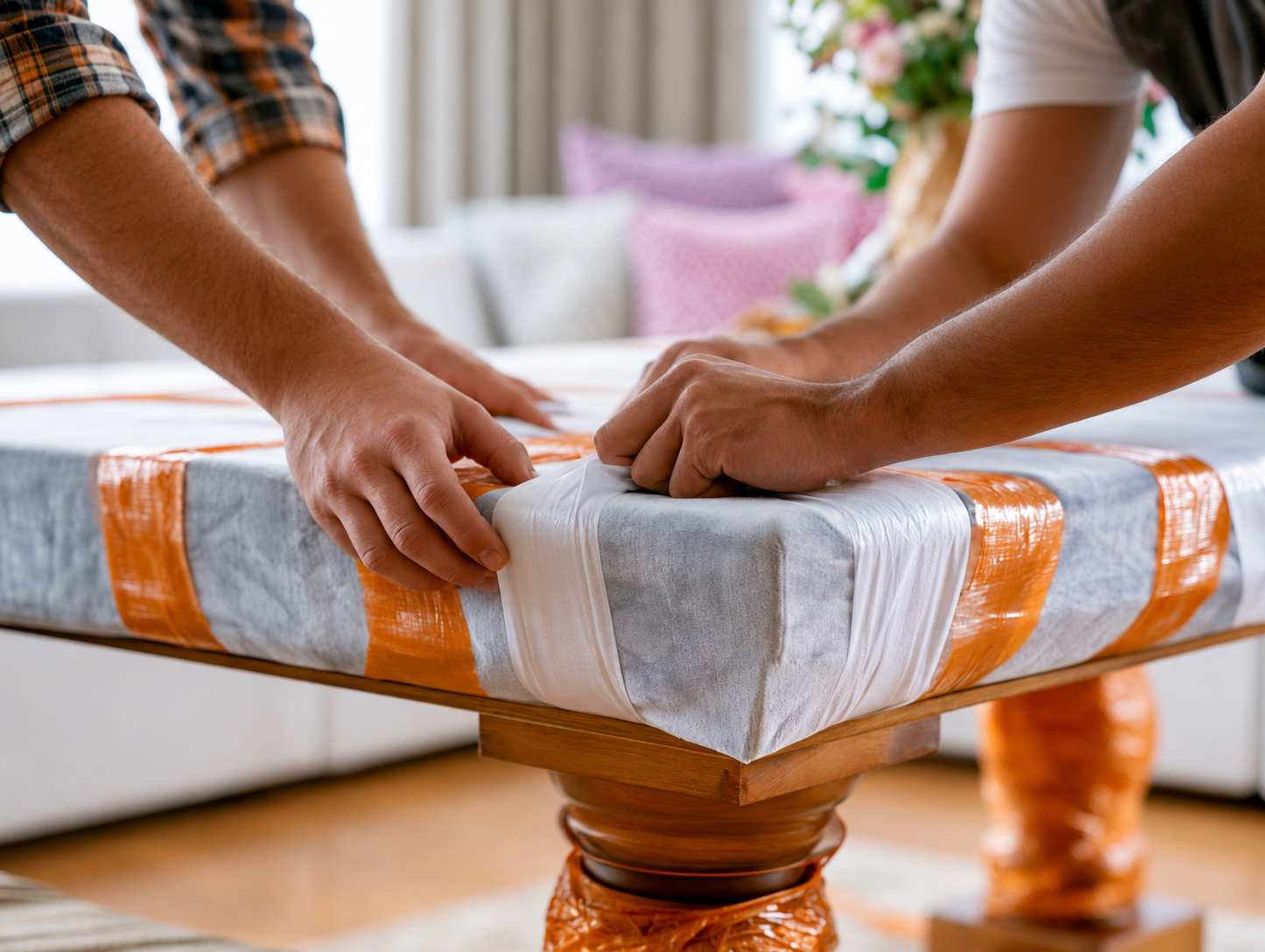
Large flat surfaces rarely get damaged. Corners, table legs and wooden edges do.
A dining table can arrive without a single mark on the table top yet lose a piece of veneer from a corner during the very first trip through a doorway.
That’s why a good removal company will focus on the vulnerable areas. Table legs are wrapped individually. Glass shelves are protected separately. Mirrors are never transported without corner protection.
A blanket loosely thrown over a piece of furniture may look reassuring, but it won’t do much if a chest of drawers comes into contact with a brick wall or a metal gate.
Load the Van as if Everything Will Move
Because it will. Many people imagine that once the van doors are closed, everything stays exactly where it was loaded. In reality, it doesn’t.
Even on smooth roads, items shift slightly. Roundabouts, speed bumps and sudden braking all create movement inside the load area.
Heavy items should form the foundation of the load and tied to the wall of the van. Lighter and fragile items should be loaded separately, later, and on top of heavier pieces.
One badly positioned chest of drawers can damage several items around it before the van even reaches the new property.
Protect Door Frames and Wall Corners
Door frames deserve almost as much attention as floors.
Most wall damage happens around corners and door openings because that’s where furniture constantly changes direction.
A sofa can make it through an entire property without any issues and still leave a mark during the final turn into a room.
Professional corner protectors cost considerably less than repairing and repainting damaged walls afterwards.
Check Access Before Moving Day

Some of the most frustrating damage happens when people start improvising.
The van arrives and there’s nowhere to park. The lift suddenly isn’t working. The fridge won’t fit through the route planned to use.
Once delays begin, people start rushing. And rushing rarely goes well with a house move.
That’s why it’s worth checking parking arrangements, lift access, staircases and door widths well in advance.
In London, it’s also worth finding out whether a parking suspension is required. Occasionally, moves can be delayed simply because there’s nowhere suitable for the van to stop close to the property.
Consider Professional Packing for Valuable Items
Most people can pack clothes, books and kitchen items without any difficulty.
Expensive furniture is a different story.
Large mirrors, marble table tops, antique cabinets and designer furniture often require more protection than standard boxes and a roll of bubble wrap from the local shop can provide.
In these situations, professional packing often pays for itself. Working with a trusted removal company in London — Great Moving, for example — means packing is handled properly as part of the removal. It makes sense when replacing a damaged item would cost significantly more than protecting it properly in the first place.
Moving house doesn’t automatically mean something will get damaged.
Most scratches, dents and chips happen before the van even leaves the driveway. A little preparation, proper protection and a well-thought-out plan usually prevent the majority of problems before the move even begins.
0
Related
Read the full article here