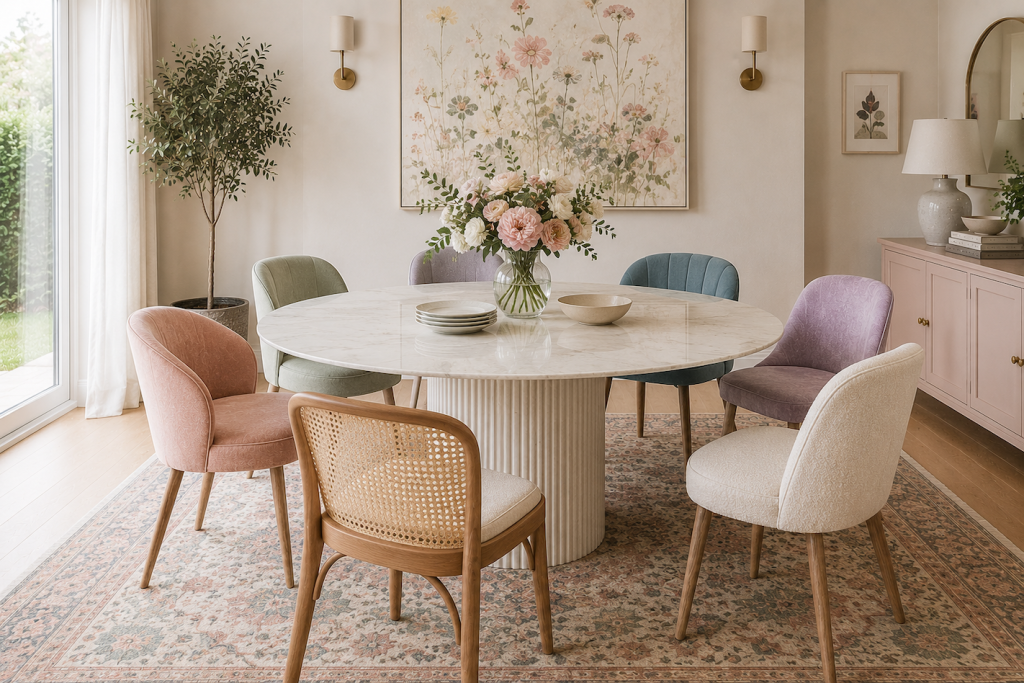
Matching dining chairs can create a smart, coordinated look, but they certainly aren’t the only option. Mixing different dining chairs around the same table can give a dining room much more personality, making it feel collected and individual rather than as though everything was bought as a set.
It’s also a practical approach. Perhaps you’ve inherited a couple of beautiful old chairs, found a vintage design you love or replaced your dining table without wanting to get rid of perfectly good seating. Mixing and matching allows you to bring different pieces together rather than starting again from scratch.
The key is making mismatched dining chairs look intentional. Too much uniformity and you lose the character that makes the look interesting; too many completely unrelated pieces and the arrangement can start to resemble a collection of spare chairs gathered from around the house.
Fortunately, there are plenty of ways to find the right balance.
Quick Answer
Mismatched dining chairs work best when the different designs share at least one element, such as colour, material, height, shape or style. You don’t need every chair to match, but repeating something around the table helps the arrangement feel intentional. For an easy starting point, try matching side chairs with contrasting chairs at each end, use the same chair in different colours, or combine dining chairs with a bench.
Do Dining Chairs Have to Match?
No. Your dining chairs don’t have to match each other, and they don’t necessarily have to match your dining table either.
A traditional matching dining set can look elegant and cohesive, particularly if you prefer a more formal or symmetrical interior. But mixing your seating introduces another layer of colour, texture, shape and personality to the room.
There are several levels of ‘mismatching’ you can experiment with.
At one end of the scale, you might have six identical chairs but choose two in a different colour. You could also use four matching side chairs with a pair of upholstered chairs at either end of the table.
At the other end, every chair could be different.
The middle ground is often the easiest to get right: choose chairs that aren’t identical but have something in common. This gives you the relaxed, collected appearance of mismatched furniture without the dining room feeling chaotic.
How to Mix and Match Dining Chairs Successfully
There isn’t a strict formula you have to follow to embrace the mismatched chair trend, which is part of the appeal. However, a few simple design principles can help different chairs feel as though they belong together.
1. Keep One Element Consistent
If you’re unsure where to start, choose one characteristic that will connect all your chairs.
This could be:
- the same or similar colour
- a particular type of wood
- similar upholstery
- a repeated shape
- similar legs
- the same design period
- similar proportions
- a consistent seat height
For example, six vintage chairs of completely different designs can suddenly look like a considered collection if they’re all painted the same deep green.
Alternatively, you could keep every chair in its original finish but choose designs with similar spindle backs or curved forms.
The connection doesn’t need to be immediately obvious. It simply gives the eye a little repetition, helping the arrangement feel deliberate.
2. Use Contrasting Chairs at the Ends of the Table

One of the simplest ways to experiment with mismatched dining chairs is to keep your side chairs the same and introduce two different chairs at either end of a rectangular table.
This approach retains plenty of symmetry, so it’s ideal if you like the idea of mixing chairs but don’t want the dining space to feel overly eclectic.
The end chairs at the head of the table can be slightly more substantial than the others. Upholstered armchairs, vintage carvers or chairs in a contrasting colour can all work well.
For example, you could pair four simple oak side chairs with two upholstered chairs in olive green or burgundy. The arrangement still looks balanced, but the contrasting chairs add far more interest than a completely matching set.
3. Choose the Same Chair in Different Colours
If you love colour but still want the room to feel coordinated, use one chair design in several different shades.
Because the silhouette remains consistent, you can be considerably more adventurous with the colour palette.
A combination of muted blue, sage green, ochre and burgundy, for example, can look wonderfully characterful around a simple wooden table.
For a calmer interpretation, use variations of the same colour family. Several greens ranging from pale sage to deep olive will provide variation without creating quite such a bold effect.
You can also use chair colours to pick up shades elsewhere in the dining room, such as artwork, curtains, a rug or painted cabinetry.
4. Use Different Chairs in the Same Colour

The opposite approach works equally well.
Collect several different chair styles and bring them together by giving them a common colour.
This is particularly effective with vintage or second-hand chairs. A mixture of spindle-back, ladder-back and simple wooden chairs might initially appear unrelated, but painting them all the same colour instantly creates a connection.
Black can give an assortment of chairs a smart contemporary edge, while deep green, navy, burgundy or muted blue introduces more personality.
You don’t necessarily have to paint them, either. Different chairs upholstered in the same fabric can achieve a similar effect.
5. Mix Different Wood Dining Chairs
Mixing different woods can seem intimidating, particularly if your dining table already has a prominent grain or colour. However, your chairs don’t need to be made from exactly the same timber as the table.
In fact, trying to find an almost-perfect match can sometimes look less convincing than deliberately choosing something different.
A solid oak table, for example, could work with darker walnut chairs, painted wooden chairs or a mixture of vintage timber designs.
Look at the room as a whole rather than focusing solely on whether two pieces of wood match. If you have a walnut sideboard, for example, walnut dining chairs will have another element in the room to relate to, even if the dining table itself is oak.
Repeating wood tones elsewhere through picture frames, shelving, flooring or smaller pieces of furniture can help mixed timbers feel connected.
6. Combine Upholstered and Wooden Dining Chairs

You don’t have to choose between wooden and upholstered seating.
Combining the two is a great way to create variation while keeping the overall arrangement relatively restrained.
One of the easiest combinations is to place simple wooden chairs along the sides of a rectangular table and larger upholstered chairs at either end.
This works particularly well in a generous dining room, where a pair of more substantial end chairs can help anchor a long table.
You could also reverse the idea, using upholstered side chairs with wooden statement piece chairs at the ends.
Think about the visual weight of each piece. The aim isn’t necessarily to make every chair the same size, but you don’t want one enormous chair to overwhelm a group of very delicate designs.
7. Mix Vintage and Contemporary Dining Chairs

Mixing old and new furniture is an easy way to make a dining room feel as though it has developed naturally over time.
Try pairing a contemporary dining table with vintage wooden chairs, or put streamlined modern chairs around an antique or rustic table.
The contrast is often more successful than attempting to make everything belong to exactly the same period.
A chunky farmhouse-style table, for example, can look surprisingly fresh surrounded by simple contemporary chairs. Equally, a minimalist modern table can provide a clean backdrop for ornate or characterful vintage seating.
You can create further connections through colour, upholstery and accessories rather than relying on the age or style of the furniture to match.
8. Use Pairs of Chairs
Mismatched doesn’t have to mean every chair is different.
Using pairs is one of the easiest ways to create an eclectic dining arrangement that still feels balanced.
Around a table seating six, you could use three pairs of different chairs:
2 + 2 + 2
For eight seats, you might use four pairs:
2 + 2 + 2 + 2
Repeated pairs give the arrangement rhythm and prevent it from becoming visually chaotic.
Try positioning identical chairs opposite one another or arranging pairs symmetrically around the table. Alternatively, distribute them less formally if you prefer a more relaxed look.
9. Add a Dining Bench

A dining bench is another simple way to break up a matching set and is an option often favoured by interior designers.
You might have a bench along one side of the table with three individual chairs opposite, or combine a bench with matching side chairs and contrasting end chairs.
Benches can be especially useful in kitchen-diners and less formal dining spaces, where they create a relaxed, sociable feel.
They can also help in smaller rooms because a backless bench has less visual impact than a row of high-backed chairs and can sometimes be tucked underneath the table when it isn’t being used.
If the bench feels disconnected from the other seating, cushions or upholstery can help bring everything together.
10. Connect Different Chairs Through Upholstery
Fabric provides another way to unify chairs that don’t otherwise match.
Perhaps you have inherited two vintage carver chairs and found another pair of chairs second-hand. Reupholstering the seats in the same fabric can instantly make the pieces feel related.
You don’t have to use exactly the same material on every chair.
Different patterns containing similar colours can be even more interesting. A striped fabric, floral and small geometric pattern, for example, could work together if they share a common palette.
This approach allows you to introduce pattern without committing to it across every chair.
11. Use Colour to Connect the Chairs to the Room

When you’re deciding whether mismatched chairs work together, don’t consider them in isolation.
Look at the whole dining room.
A burgundy chair might relate to a colour in the artwork, while an ochre chair echoes a lampshade and a green chair picks up the colour of painted cabinetry.
Suddenly, what initially appears to be an assortment of unrelated chairs becomes part of a much broader colour scheme.
This is particularly useful if you enjoy colourful interiors. Rather than matching the chairs to each other, you’re effectively matching each one to another element within the room.
12. Balance the Visual Weight
Different chairs don’t need identical proportions, but they should look reasonably balanced around the table.
A delicate wooden chair with slender legs may look lost next to several enormous upholstered armchairs. Similarly, six very substantial chairs can make a relatively small dining table appear cramped.
Stand back and look at the arrangement as a whole.
Are all the visually heavy chairs concentrated at one end? Is one chair noticeably taller than everything else? Does one style dominate?
Moving the chairs around can sometimes solve the problem without changing any of the furniture.
13. Keep Seat Heights Reasonably Similar

This is one practical area where your mismatched chairs should be fairly consistent.
The backs, colours and materials can all vary, but everyone should be able to sit comfortably at approximately the same height in relation to the table.
A small variation probably won’t matter, but noticeably different seat heights can make both the arrangement and the dining experience feel awkward.
Don’t forget to consider upholstered seat cushions too, as thick cushioning can alter the effective seat height.
If you’re buying new chairs rather than working with furniture you already own, take measurements carefully before ordering.
14. Consider the Dining Table
Your table is the anchor that holds all those different chairs together, so take its material, shape and visual weight into account.
Oak dining tables are particularly versatile. Try painted chairs, darker timber, upholstered designs, spindle backs or a mixture of old and new.
Dark wood tables can work beautifully with lighter upholstery, painted chairs or paler timber if you want to create contrast.
Glass dining tables often benefit from chairs that introduce warmth, colour or texture. Timber and upholstered chairs can prevent the room from feeling too stark.
Rustic tables don’t necessarily require rustic chairs. Contemporary seating can create an appealing contrast with a substantial reclaimed or farmhouse-style table.
Round tables put every chair on an equal footing, so differences between the chairs tend to be more noticeable. You can still mismatch them, but using chairs of a reasonably similar scale or repeating colours can help create cohesion.
Don’t feel you need to match your table and chairs perfectly. Contrast is often what makes the combination interesting.
15. Let One Chair Be the Odd One Out

Sometimes breaking your own rules produces the most characterful result.
You might have five fairly similar chairs and one wonderful vintage chair that doesn’t match anything else.
Use it. A single odd chair can make an otherwise conventional arrangement feel much more personal. It works especially well in relaxed kitchen-diners, where an overly formal arrangement isn’t necessary.
The important distinction is between something looking accidentally out of place and confidently different. If you love the chair, give it enough breathing room to look intentional.
How Many Different Dining Chair Styles Can You Mix?
There’s no maximum number of chair designs you can use, but the more styles you introduce, the more important it becomes to create connections between them.
To make things easy, try:
| Number of seats | Mismatched combination |
|---|---|
| 4 | 2 + 2 |
| 6 | 4 + 2 or 2 + 2 + 2 |
| 8 | 6 + 2 or 4 + 2 + 2 |
| 10 | 8 + 2 or several repeated pairs |
You certainly don’t have to follow these formulas. Six completely different vintage chairs can look fantastic around the same table.
If every chair is unique, however, look for another way to create cohesion. Similar wood tones, a repeated colour, matching upholstery or chairs from roughly the same period can stop the arrangement from looking like random chairs around a table.
How to Make Mismatched Dining Chairs Look Intentional

If your dining chairs look more accidental than artfully mismatched, don’t immediately assume you need to replace them.
Try these five things first:
- Find a common element. Look for a colour, material, shape or finish you can repeat.
- Check the proportions. Keep seat heights relatively consistent and distribute larger chairs evenly.
- Create repetition. A pair of chairs or repeated colour can make a surprising difference.
- Connect the chairs to the room. Repeat their colours and materials through artwork, lighting, rugs and accessories.
- Edit the arrangement. Sometimes one chair really doesn’t work. Removing it can be more effective than trying to make five other chairs coordinate with it.
It’s often easier to judge the arrangement from the doorway or even from a photograph than when you’re standing immediately beside the table.
Mismatched Dining Chair Ideas for Different Interior Styles
Mismatched seating isn’t limited to eclectic interiors. You can adapt the idea to almost any dining room decor style.
Contemporary Dining Rooms
Keep the chair shapes relatively simple but introduce variation through colour, upholstery or material. A restrained palette will help the overall effect remain streamlined.
Mid-Century Inspired Dining Rooms
Mix timber chairs with slender legs and sculptural shapes. They don’t need to be identical, but keeping the proportions relatively light will help them work together.
Country Dining Rooms
This is perhaps the easiest setting for mismatched chairs. Combine spindle-back and ladder-back chairs, painted furniture, natural timber and a dining bench for a relaxed collected-over-time appearance.
Eclectic Dining Rooms
This is your opportunity to be bolder. Mix vintage finds, upholstery, different colours and distinctive chair shapes, using the wider room palette to bring everything together in an eclectic style.
Traditional Dining Rooms
You don’t need to abandon symmetry. Keep matching side chairs and introduce a pair of contrasting upholstered carvers at the ends of the table.
Scandinavian-Inspired Dining Rooms
Mix simple chair designs in pale wood, white and black. Keeping the shapes clean and the materials natural allows for variation without making the space feel cluttered.
Colourful Contemporary Dining Rooms
Try one chair design in several colours or use different chair styles in a controlled palette. Deep green, burgundy, muted blue, ochre and warm timber can create a rich but sophisticated combination.
Common Mismatched Dining Chair Mistakes

Mixing dining chairs is supposed to look relaxed, but that doesn’t mean anything goes. There are a few common problems worth watching for whilst trying to nail the mismatched dining chair trend.
Every Chair Is Competing for Attention
If every chair has an unusual shape, bright colour, patterned fabric and decorative detailing, there’s nowhere for the eye to rest.
Let one or two elements take centre stage and keep others quieter.
Nothing Connects the Chairs
Your chairs don’t have to match, but there should ideally be something that makes them feel like a collection.
If there’s no connection at all, consider adding one through paint or upholstery rather than replacing the furniture.
The Seat Heights Are Too Different
This is one mismatch that’s difficult to disguise. Chairs with significantly different seat heights can look awkward and be uncomfortable to use around the same table.
The Chairs Are Too Large for the Table
Mixing styles doesn’t override the need for sensible proportions. Too many wide or heavily upholstered chairs can make the dining area feel crowded.
The Chairs Almost Match
Curiously, chairs that are very similar but not quite identical can sometimes look less deliberate than completely contrasting designs.
If you’ve been unable to find another exact match for an existing chair, consider choosing something obviously different instead.
The Rest of the Dining Room Has Been Forgotten
Dining chairs are only one part of the room.
Look at how the design style, materials and colours interact with the table, flooring, rug, pendant lighting, curtains, artwork and nearby furniture. The whole room should feel connected, even when the individual chairs aren’t.
Can You Mix Dining Chairs and a Bench?
Absolutely. In fact, a bench is one of the easiest ways to introduce mismatched seating without using lots of different chair designs.
A simple arrangement might consist of a bench along one side of the table with individual chairs opposite. For a larger rectangular table, you could also place contrasting chairs at either end.
A backless wooden bench is particularly useful when you want to keep the dining area visually open. An upholstered bench creates a softer, more comfortable look and gives you another opportunity to introduce colour or pattern.
If you’re working with a small dining area, check that there’s enough room to pull chairs out comfortably. A bench positioned against a wall may save space, while one that needs to be pulled backwards every time someone sits down may actually require more room than expected.
Do Mismatched Chairs Work Around a Round Table?
Yes, a round dining room table with mismatched chairs works, although the effect is slightly different from using them with a rectangular table.
With a rectangular table, you can create an obvious hierarchy by using one style along the sides and statement chairs at the ends.
A round table doesn’t have ends, so every chair is equally prominent.
For this reason, a little repetition can be helpful. You could alternate two chair designs, use the same design in different colours or choose individual chairs that share similar proportions.
A round table surrounded by completely different vintage chairs can also look fantastic, particularly if they’re connected through colour or material.
Should You Buy Mismatched Chairs or Collect Them Over Time?

You can deliberately create a mismatched set in one go, but there’s something particularly appealing about allowing a collection to evolve.
You might already own two chairs you love, find another pair second-hand and eventually add a couple of vintage pieces.
This approach can produce a more authentic collected look and also means you don’t have to replace perfectly usable furniture simply because it doesn’t belong to a complete set.
Vintage shops, antique centres, reclamation businesses and second-hand marketplaces can all be useful sources of individual chairs and pairs.
Don’t dismiss a good chair because you dislike its existing upholstery or color palette. Solid chairs can often be transformed surprisingly easily with new fabric or paint.
FAQs About Mismatched Dining Chairs
Is It OK to Have Mismatched Dining Chairs?
Yes. Mismatched dining chairs can make a dining room feel more individual and characterful. For the most cohesive look, try to repeat at least one element, such as colour, material, upholstery, shape or design period.
Do Dining Chairs Need to Match the Dining Table?
No. Mismatched dining room chairs in contrasting materials or styles can actually make both the chairs and table more interesting. Consider how the furniture works together rather than trying to find an exact match.
Can You Mix Different Coloured Dining Chairs?
Yes. Using the same chair design in several different colours is one of the easiest ways to create a mismatched dining arrangement. Alternatively, choose different chairs in colours that relate to the wider room scheme.
Can You Mix Different Wood Dining Chairs?
Yes. Different wood tones can work well together, particularly if the colours are repeated elsewhere in the room. Don’t feel you have to find chairs in exactly the same timber as your dining table as different materials can be sucessfully combined.
Should End Dining Chairs Be Different?
They can be. Using two contrasting chairs at the ends of a rectangular table is a simple way to introduce variety while retaining symmetry. Larger upholstered chairs, carvers or chairs in a different colour work particularly well.
Can All Your Dining Chairs Be Different?
Yes. If every chair is different, look for another feature that brings the collection together. Similar proportions, repeated colours, related wood tones or matching seat upholstery can provide the necessary cohesion.
Create a Dining Room That Feels Collected, Not Coordinated
The best mismatched dining rooms rarely look as though someone has tried desperately to make everything match.
Instead, there are small connections: a repeated wood tone, a colour that appears again in a rug, two chairs with similar curves or upholstery that ties several different designs together.
That’s what makes the approach so versatile. You can work with chairs you already own, introduce vintage finds, mix expensive pieces with inexpensive ones and change the arrangement as your home evolves.
Start gently if you’re unsure. Swap the two end chairs, add a bench or introduce a pair in a different colour. Once you see how effective a little contrast can be, you may decide that a perfectly matching set isn’t what your dining room needed after all.
0
Related
Read the full article here