


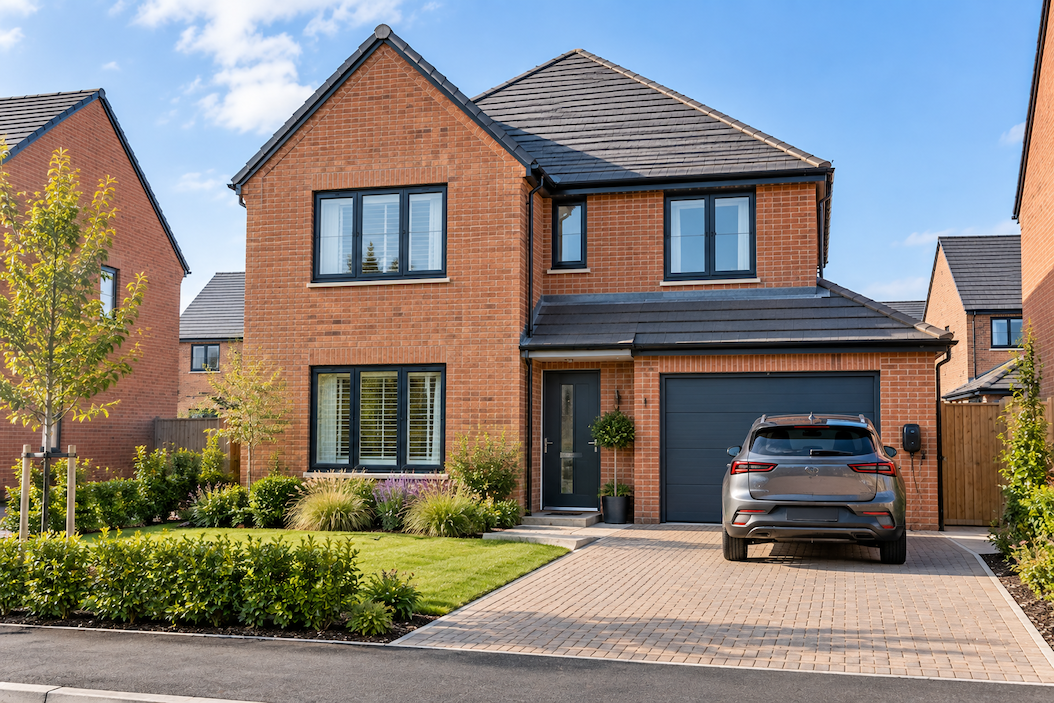
If you’re buying a new-build home, it comes with an unusual opportunity: you can often make decisions about the property before you’ve even moved into it. Depending on the developer and how far construction has progressed, you might be invited to choose everything from kitchen worktops and flooring to extra sockets, fitted wardrobes and garden landscaping.
It’s exciting, but it’s also surprisingly easy to spend a small fortune. Once you’ve visited a beautifully finished show home, the standard specification can suddenly seem rather basic. Add upgraded flooring here, better kitchen cabinets there and a few electrical extras, and your original budget can quickly start creeping upwards.
So, which new-build extras are actually worth paying for? A useful rule is to prioritise anything that would be difficult, disruptive or expensive to add after the house is finished. Be much more selective about decorative upgrades that you could easily change yourself once you’ve moved in.
Here’s how to decide where your new-build upgrade budget is best spent.
Quick Answer: What New Build Extras Are Worth It?
The new-build extras most worth paying for are usually those that are difficult or disruptive to add later, such as extra plug sockets, additional lighting points, useful kitchen storage, outdoor power and water, and certain plumbing or bathroom upgrades. Flooring and fitted wardrobes can also be worthwhile, but compare the developer’s price and specification with independent alternatives first. Cosmetic extras such as premium paint colours, wallpaper, designer light fittings, kitchen handles and bathroom accessories are often better added after you move in, when you’ll have more choice and may pay less.
What Are New-Build Extras?
New-build extras are optional features or upgrades offered in addition to the property’s standard specification. Exactly what’s available varies between housebuilders, developments and individual properties. Your options may also depend on the stage your home has reached in the construction process.
Typical choices include:
- Upgraded kitchens and appliances
- Flooring
- Bathroom tiles and fittings
- Additional electrical sockets
- Lighting
- Fitted wardrobes
- Smart-home technology
- Garden landscaping
- Outdoor power and water
- Upgraded doors and finishes
- Decorating packages
Some of these are fundamental changes to the house, while others are largely cosmetic. That distinction is important.
Moving an electrical point before the plasterboard goes up is relatively straightforward. Doing the same thing in your beautifully decorated home six months later involves considerably more work. Changing a cupboard handle, meanwhile, takes minutes.
First, Find Out What’s Actually Included
Before falling in love with anything in the show home, ask for a detailed written specification for the property you’re buying.
Show homes are designed to sell a lifestyle and frequently contain numerous upgrades. The kitchen you’ve been admiring may have premium worktops, additional cabinets, upgraded appliances and expensive flooring that aren’t included in the standard house price. Find out precisely what you’ll receive without paying anything extra.
If you’re considering an upgrade package, ask for individual prices too. A package can seem convenient, but it isn’t necessarily good value if you’re paying for several things you don’t particularly want.
It’s also worth asking when decisions have to be made. Choices involving wiring, plumbing or the kitchen layout may need to be finalised relatively early in the build.
New-Build Extras That Can Be Worth Paying For
There’s no universal list of upgrades that every buyer should choose. Your lifestyle, budget and plans for the property all matter.
However, some extras deserve serious consideration because they’re much easier to incorporate during construction than afterwards.
1. Extra Plug Sockets

Extra electrical sockets aren’t particularly exciting when they’re competing with beautiful worktops and bathroom tiles for your attention, but they could turn out to be one of your best purchases.
Modern households use a lot of electrical equipment, and a poorly positioned socket can be irritating every single day. Before choosing additional sockets, take a copy of the floor plan and roughly draw in your furniture.
Where will the beds go? Where is the television likely to sit? Is there a suitable socket for a lamp beside the sofa? Where will you plug in a vacuum cleaner? Will you have a desk or dressing table?
Particularly useful locations can include:
- Either side of the main bed
- Home-office areas
- Behind the television
- Kitchen and dining areas
- Hallways and landings
- Utility rooms
- Garages
- Near occasional furniture where you may use lamps
You may also be offered sockets incorporating USB or USB-C charging. These can be convenient, although charging standards change over time, so don’t assume you need them everywhere. Getting the basic number and position of ordinary sockets right is more important.
2. Additional Lighting Points
The same principle applies to lighting. You can easily replace a lampshade or pendant once you’ve moved in. Adding an entirely new lighting point is another matter. Think about how you want to light each room rather than simply accepting the standard central ceiling light.
Wall lights beside a bed, additional pendants over a kitchen island, useful lighting in a utility room and properly positioned exterior lights could all be easier to arrange while the house is being built.
Don’t automatically assume that more spotlights mean better lighting, either. A comfortable home normally benefits from layers of light rather than relying entirely on bright overhead lighting.
The important upgrade is often the electrical provision, not the decorative fitting itself.
3. Practical Kitchen Upgrades

The kitchen is one of the easiest places to overspend because it’s usually where developers offer the greatest number of enticing upgrades. Concentrate first on things that improve the kitchen’s layout, capacity or everyday usability.
Extra cabinets, deep drawers, better internal storage and a more practical arrangement of units could be worth considering because changing the kitchen structure later may be costly. The same applies to additional electrical points and any significant plumbing changes.
A worktop upgrade needs slightly more thought. If you genuinely want a particular surface and replacing the standard worktop later would mean disturbing the sink, hob, splashback or tiles, having it fitted from the beginning may make sense.
Decorative upgrades are different. Premium handles, for example, can sometimes cost disproportionately more through an upgrade package despite being one of the simplest things to replace yourself.
Spend your kitchen budget on the parts that are difficult to change first.
4. Integrated Appliances – But Check the Specification
Having integrated appliances installed before you move in is undoubtedly convenient. You don’t have to organise delivery immediately after completion, and appliances such as dishwashers and fridge freezers can sit neatly behind matching cabinet doors.
But don’t judge an appliance upgrade by the brand name alone. Find out the exact model being supplied and compare its specification and price with alternatives available independently. An expensive developer appliance package isn’t automatically better value.
Also consider whether you actually want every appliance integrated. Freestanding models can sometimes offer greater choice and be simpler to replace in future.
5. Additional Bathroom Tiling

Bathroom tiling is another upgrade where it helps to think about future disruption. If the standard specification only includes a small amount of tiling and you know you’d prefer more, having it completed before you move in could save considerable hassle.
Retiling later can mean removing fittings, dealing with dust and debris and potentially trying to match tiles that are no longer available.
There’s less reason to pay a large premium simply to obtain a fashionable decorative tile, however. Look at what you’re paying for: additional practical coverage may be worthwhile; a costly style upgrade may not be.
6. Practical Shower Upgrades
If the standard bathroom doesn’t include the shower arrangement you need, this is another area worth considering before completion. Adding a shower over a bath, changing the plumbing arrangement or improving a very basic enclosure can be considerably more disruptive after you’ve moved in.
Again, concentrate on function. A better shower layout may improve everyday life far more than an expensive designer tap.
7. Fitted Wardrobes

Fitted wardrobes fall firmly into the “compare before you buy” category. They’re extremely convenient. Your bedroom is immediately ready to use, you gain plenty of storage and there’s no need to find large freestanding wardrobes after moving.
However, developer-fitted wardrobes aren’t necessarily the most efficient use of the available space. Before agreeing, look carefully at the internal arrangement as well as the doors. How much hanging space is there? Are there drawers? Does the wardrobe extend to the ceiling? Is there wasted space?
Compare the upgrade price with quotes from independent fitted-furniture companies.
If the developer’s wardrobes suit the room well, are a good size and are competitively priced, they can be a worthwhile addition. If not, waiting may give you a much better result.
8. An Outside Tap and Electrical Sockets
These are the sort of mundane upgrades that are easily overlooked during an exciting options appointment. Then summer arrives and you discover how useful they are.
An outside tap makes watering plants, cleaning garden furniture and washing muddy equipment much easier. Outdoor electrical sockets can be useful for garden tools, lighting and entertaining.
If these aren’t included as standard, find out what it would cost to have them incorporated during construction and compare this with the likely cost of installing them afterwards.
9. EV Charging Provision

Depending on the property, its parking arrangements and what is already provided under current building requirements, you may also want to consider electric vehicle charging. Check the specification carefully first, as your new home may already include the necessary provision.
If it doesn’t, think about your likely future needs as well as the car you currently own. Even if you don’t drive an electric vehicle now, appropriate electrical infrastructure could be useful in future.
10. Garage Electrics
If your new home has a garage, don’t regard it purely as somewhere to park a car. Garages frequently become workshops, exercise areas, utility spaces and valuable household storage.
Good lighting and sufficient sockets can therefore be surprisingly useful. Adding them during construction could be easier than trying to improve a poorly equipped garage afterwards.
New-Build Extras You Can Often Skip
At the other end of the scale are upgrades that sound attractive but are relatively simple to add or change once the property is yours.
1. Premium Paint Colours
There’s nothing wrong with wanting colour in a new-build, but you don’t necessarily need to pay the developer to provide it. In fact, living with the house for a while can be useful. You’ll discover how the natural light changes throughout the day, which rooms feel cooler or warmer and how your furniture and belongings affect the space.
You can then choose interior colour ideas specifically for your home rather than selecting from a limited upgrade palette before you’ve even lived there. Painting is also relatively straightforward compared with changing wiring, plumbing or flooring.
2. Feature Walls and Wallpaper

The same applies to wallpaper and decorative feature walls. These are easy ways to add personality after moving in and you’ll have an almost unlimited choice of designs rather than being restricted to the developer’s selection.
If the upgrade price is high, save the money and decorate once you’ve had time to decide what the room actually needs.
3. Expensive Light Fittings
It’s important to distinguish between lighting positions and light fittings. Paying to have an additional electrical point installed in exactly the right place can make sense. Paying a large premium for the pendant hanging from it may not.
Light fittings are relatively easy to replace, and shopping independently gives you far more choice.
4. Premium Kitchen Handles

Kitchen handles are a perfect example of something that can look transformative without requiring a major renovation.
If you don’t like the standard handles, check their size and fixing centres. You may be able to replace them after moving in with something far more distinctive. It’s also an easy way to make a standard new-build kitchen feel less like everyone else’s.
5. Bathroom Accessories
Mirrors, shelves and other decorative bathroom accessories can often be bought independently for considerably less than a developer upgrade package.
There is one important exception: anything involving concealed wiring or plumbing deserves more consideration.
If you want a hardwired illuminated mirror, for example, it may be worth arranging the electrical provision in advance even if you buy the mirror separately later.
6. Furniture Packages

A fully furnished new home certainly looks appealing in a brochure. For most people, however, choosing furniture gradually is likely to produce a home that feels much more individual. It also allows you to measure the rooms properly and understand how you naturally move through them.
A sofa that looks perfect on a floor plan may feel enormous once you’re actually standing in the room.
Furniture packages may be convenient in certain circumstances, but don’t buy one simply because you’re worried about having empty rooms when you move in. A home doesn’t have to be completely furnished on day one.
7. Smart-Home Gadgets You Don’t Really Need
“Smart” doesn’t automatically mean useful. Before paying for a technology package, find out exactly what it includes.
Ask yourself whether you’ll genuinely use the system, whether it’s compatible with other technology you own and whether individual components can easily be upgraded or replaced. Also check whether any features rely on subscriptions or proprietary apps.
Wiring and useful infrastructure may have long-term value. A bundle of fashionable gadgets could become outdated surprisingly quickly.
Is New-Build Flooring Worth Paying For?

Flooring deserves special attention because it’s often one of the biggest items on a new-build extras list. There’s a strong argument for having it installed by the developer.
Your house is finished when you receive the keys. You can move furniture straight in and don’t need to coordinate carpet fitters or flooring contractors during an already hectic moving period.
On the other hand, arranging flooring independently can give you much greater choice. You may be able to afford a better-quality carpet, engineered wood, luxury vinyl tile or other flooring for the same budget – or simply find something that suits your taste better. If you’re considering timber flooring, our guide to engineered oak flooring explains what to look for before buying.
So don’t automatically accept or reject the developer’s flooring package. Ask exactly what product is being supplied. Find out the manufacturer, range and specification where possible, then obtain comparable independent quotes. Remember to include fitting, underlay, trims and any floor preparation when comparing prices.
Convenience has value, particularly when you’re moving house. But it shouldn’t disguise a poor-quality product or an excessive markup.
Should You Pay for New-Build Garden Upgrades?

The garden can be another tempting place to spend your upgrade budget. Depending on the development, you might be offered turf, patios, paving, sheds, fencing or planting.
Some practical work may be worth doing from the outset. A properly constructed patio, for example, could save significant disruption later, particularly if access to the rear garden is difficult once neighbouring homes and fences are completed. An outside tap and electrical supply can also be useful from day one. Decorative landscaping is less clear-cut.
Waiting gives you time to discover which areas receive sun and shade, how you actually use the garden and where you want seating, storage and planting. It also gives you greater freedom over plants and materials.
Pay particular attention to what’s underneath the attractive finished surface. New-build gardens can sometimes suffer from compacted ground, drainage problems and poor soil. Beautiful new turf won’t solve underlying problems if the ground hasn’t been properly prepared.
If you’re paying a premium for landscaping, ask what preparation is included rather than judging it purely by how the finished garden will look.
Will New-Build Extras Add Value to Your Home?
This is where it’s worth separating value from cost. Spending £3,000 on upgrades doesn’t automatically make your property worth £3,000 more.
Some upgrades primarily improve everyday life. Extra storage, well-positioned sockets and a better kitchen layout may make the house significantly more convenient without having an easily measurable effect on its eventual selling price.
Others may improve its appeal to future buyers. And some are simply personal luxuries. There’s nothing wrong with spending money on something because you love it. You’re buying a home, not merely an investment.
The important thing is to recognise why you’re spending the money rather than convincing yourself that every optional extra will eventually pay for itself.
Use the Retrofit Test Before Saying Yes

When you’re faced with a long options list, there’s a simple way to assess each extra.
Ask yourself:
How difficult would this be to add later?
Then consider four factors.
Disruption: Would walls need to be opened, floors lifted, tiles removed or rooms redecorated?
Cost: Is it substantially cheaper to do the work during construction?
Choice: Could you get something better or more suited to your taste by arranging it independently?
Urgency: Do you genuinely need it before you move in?
An upgrade that’s difficult to retrofit, reasonably priced and genuinely useful deserves serious consideration. Something that’s expensive, purely decorative and easy to replace can probably wait.
New-Build Extras: What’s Worth It?
Here’s a quick guide to some of the most commonly offered extras.
| New-build extra | General verdict | Why? |
|---|---|---|
| Extra plug sockets | Worth considering | Much easier to position before the house is finished |
| Additional lighting points | Worth considering | Avoids disruptive electrical work later |
| Outdoor socket and tap | Worth considering | Practical additions that can be harder to retrofit |
| Kitchen storage/layout improvements | Worth considering | Major changes are expensive once the kitchen is installed |
| Additional bathroom tiling | Consider | Can save considerable disruption later |
| Flooring | Compare carefully | Developer convenience versus greater independent choice |
| Fitted wardrobes | Compare prices | Useful, but independent options may offer better storage |
| Integrated appliances | Compare specification | Check you’re actually getting good value |
| Garden landscaping | Often worth waiting | Living there first helps you plan the space properly |
| Premium paint colours | Usually skip | Straightforward to change later |
| Wallpaper packages | Usually skip | Greater choice if you arrange it yourself |
| Designer light fittings | Usually skip | Electrical positions matter more than fittings |
| Kitchen handles | Usually skip | One of the easiest kitchen details to change |
| Bathroom accessories | Usually skip | Easy to source independently |
| Furniture packages | Usually skip | Choosing furniture yourself creates a more individual home |
Can You Negotiate New-Build Extras?
It’s always worth asking. How much flexibility a developer has will depend on the development, demand, construction stage and individual plot. A popular property that’s attracting plenty of interest is unlikely to come with the same incentives as one the developer is particularly keen to sell.
However, developers may sometimes be more willing to offer incentives or extras than reduce the advertised price of a property. These might include flooring, upgraded appliances, contributions towards certain costs or an allowance to spend on options.
Don’t assume anything will be included, and make sure any agreed incentives are properly documented as part of the purchase process. Most importantly, don’t let a “free” upgrade persuade you to buy a property that isn’t otherwise right for you.
Spend Your Upgrade Budget Behind the Finish
The most worthwhile new-build extras aren’t necessarily the ones that make a show home look impressive. An upgraded tap might catch your eye, but you’ll probably appreciate having enough plug sockets far more once you’ve lived in the house for a year.
When your budget is limited, concentrate first on the things hidden behind the finished surfaces: wiring, plumbing, useful lighting positions, kitchen functionality and practical infrastructure.
Then look at anything that would be particularly inconvenient to replace once you’ve moved in, such as flooring or extensive bathroom tiling.
Leave the easy cosmetic changes until last. Paint colours, cupboard handles, pendant lights and accessories can all be changed gradually as you turn the blank canvas of a new-build into a home that actually feels like yours.
The best new-build upgrades aren’t necessarily the most luxurious. They’re the ones that make you think, several years down the line, I’m glad we had that done before we moved in.
0
Related
Read the full article here