





If you thought a rug was just a rug, stand back and let us ‘floor’ you with our guide to rugs!
A well-chosen rug can completely transform a room, adding warmth, texture, colour and comfort while also protecting your floors and helping to define your living space.
Whether you’re looking for a practical hallway runner, a statement rug for your living room or a cosy addition to your bedroom, understanding the different types of rugs will help you make the right choice.
Why Use a Rug?
Rugs are one of the easiest and most affordable ways to update a room without redecorating. They can instantly soften hard flooring, introduce pattern and colour, and make a space feel more welcoming.
Some of the biggest benefits include:
- Protecting wooden, laminate and tiled floors from scratches, scuffs and furniture marks.
- Reducing wear in high-traffic areas such as hallways and entrances.
- Helping to absorb sound, making rooms feel quieter and less echoey.
- Adding warmth and insulation underfoot, especially on hard flooring.
- Improving safety by reducing slippery surfaces when paired with a quality non-slip underlay.
- Defining different zones within an open-plan space, such as separating a dining area from a seating area.
- Introducing colour, texture and pattern without the commitment of painting or replacing flooring.
- Making a room feel more comfortable, balanced and inviting.
Rugs vs Mats: What’s the Difference?
Although the terms are often used interchangeably, there are some important differences.
Mats are generally designed with a practical purpose in mind. They tend to be smaller, tougher and easier to clean. Examples include:
- Doormats
- Boot mats
- Kitchen mats
- Bath mats
- Utility room mats
Their primary role is protecting floors, trapping dirt or providing additional grip.
Rugs, on the other hand, are usually larger and are chosen for both their appearance and practicality. While they still protect flooring and improve comfort, they’re often used as decorative features that help complete a room’s interior design.
Different Types of Rugs
There are hundreds of rug styles available, but most fall into a few main categories.
Area Rugs


Area rugs are by far the most popular choice for modern homes. Unlike fitted carpets, they cover only part of the floor, allowing attractive flooring to remain visible around the edges.
Available in almost every imaginable size, shape, colour and material, area rugs work well in:
- Living rooms
- Dining rooms
- Bedrooms
- Home offices
- Conservatories
A large area rug can anchor your furniture and make a room feel more cohesive. Ideally, the front legs of sofas and chairs should sit on the rug to create a balanced layout.
Runner Rugs


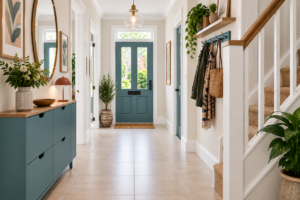
Runner rugs are long, narrow rugs designed for hallways, corridors, kitchens and other transitional spaces.
Because hallways are often among the busiest areas of the home, runners help protect flooring while making these spaces feel warmer and more welcoming.
Look for runners with durable fibres and washable finishes if they’ll receive heavy daily use.
Stair Runners

Stair runners are specially designed to fit staircases.
Besides creating an elegant, traditional look, they also offer several practical advantages:
- Reduce slipping on wooden stairs.
- Cushion footsteps.
- Minimise noise.
- Protect timber treads from everyday wear.
Professional installation is usually recommended to ensure the runner is securely fixed.
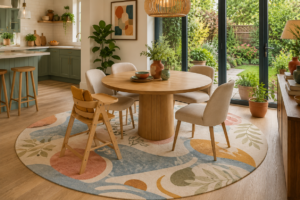
Round Rugs


Round rugs are ideal for breaking up the straight lines found in many interiors.
They’re particularly effective beneath:
- Round dining tables
- Coffee tables
- Reading chairs
- Pendant lighting
- Children’s play areas
A circular rug can soften a room and create an attractive focal point.
Outdoor Rugs


Made from weather-resistant synthetic fibres, outdoor rugs are designed for patios, decking, balconies and garden rooms.
Many can also be used indoors in busy family homes because they’re extremely durable and easy to clean.
Choosing the Right Rug Material
The material you choose affects both appearance and durability.
Wool is naturally soft, warm and long-lasting, making it ideal for living rooms and bedrooms.
Cotton rugs are lightweight, affordable and often machine washable.
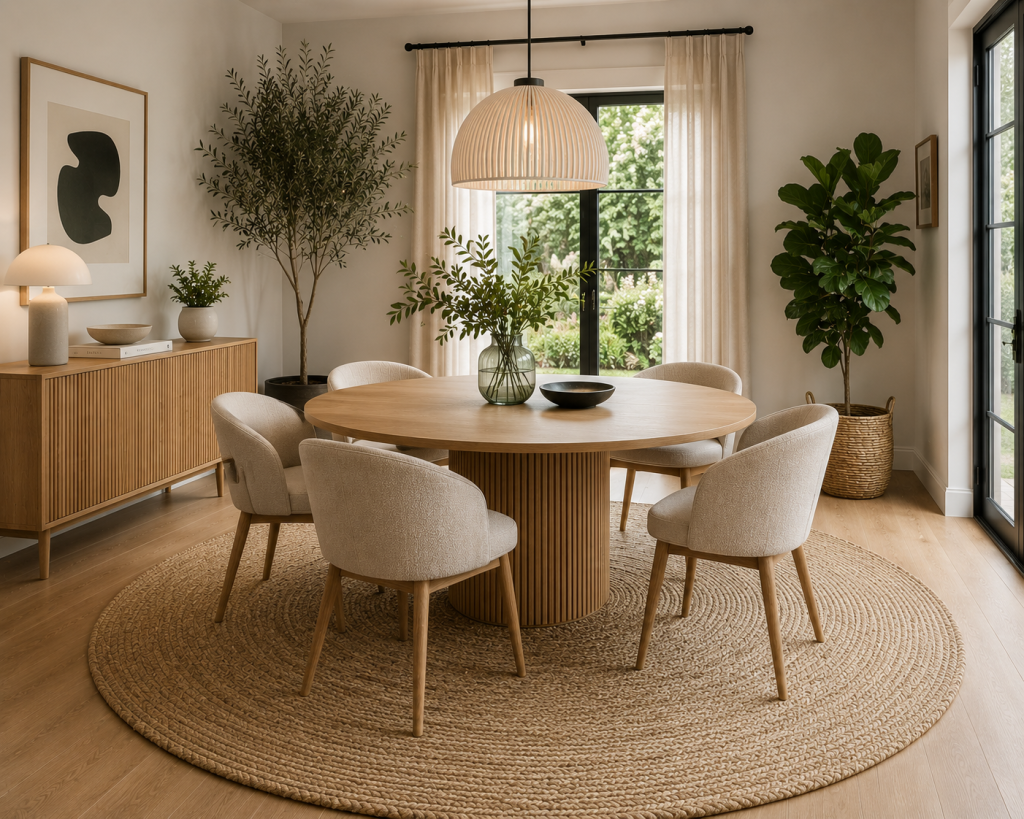
Jute and sisal create a relaxed, natural look and work beautifully in contemporary, coastal and Scandinavian-inspired interiors.
Synthetic fibres, such as polypropylene, are stain-resistant, hardwearing and ideal for busy households with children or pets.
Faux sheepskin adds luxurious texture and is perfect layered over larger natural-fibre rugs.
Choosing the Right Rug Size
One of the biggest decorating mistakes is choosing a rug that’s too small.
As a general guide:
- Living room: Choose a rug large enough for at least the front legs of your seating to sit on.
- Dining room: The rug should extend at least 60-70cm beyond the edge of the table so chairs remain on the rug when pulled out.
- Bedroom: A large rug placed beneath the lower two-thirds of the bed creates a luxurious hotel-style look.
- Hallway: Leave a small border of flooring visible around the runner for a neater appearance.
When in doubt, go larger rather than smaller.
Layering Rugs

Layering rugs has become an increasingly popular interior design trend.
Try placing:
- a faux sheepskin over a woven jute rug
- a patterned vintage rug over a large neutral rug
- a colourful runner across natural timber flooring
Layering adds depth, texture and visual interest while allowing you to refresh a room without replacing your larger rug.
Caring for Your Rug
Always choose a rug that’s suitable for the room where it will be used.
For busy areas such as hallways, kitchens and family rooms, washable or stain-resistant rugs are usually the best option.
To keep your rug looking its best:
- Vacuum regularly.
- Rotate it every six months to ensure even wear.
- Blot spills immediately rather than rubbing them.
- Use a rug underlay to prevent slipping and reduce wear.
- Follow the manufacturer’s cleaning instructions carefully.
Natural fibre rugs may shed slightly when new, while delicate wool or handmade rugs may require professional cleaning.
The Finishing Touch
A beautiful rug does much more than cover a floor. It can soften a space, introduce personality, improve comfort and help pull an entire room together.
Whether you prefer timeless Persian-inspired patterns, bold geometric prints, natural woven textures or luxurious wool designs, the right rug can completely change the atmosphere of a room without the expense of replacing your flooring.
With so many colours, materials and styles available, investing a little time in choosing the right rug is well worth the effort—and once it’s in place, you’ll wonder how the room ever looked complete without it.
Top Product Picks


Vivienne rug, £175 from Cox & Cox. Inspired by a timeless heritage design, this Vivienne rug adds a touch of vintage appeal to your home.


Indra dark grey handwoven wool round rug, £149.99 from daals. Handmade by artisans from India using traditional local weaving techniques, this textured rug feels comfortable underfoot and adds interest to your room.


Stripy jute rug (above and main image), from £295 from Loaf. Handmade on the loom using old-school techniques, each one is unique with a casual, comfy feel that’s crafted to last. Available in three sizes.

Blue and orange stripe woven runner rug, £75 from Oliver Bonas. Woven runner rug featuring a vertical blue, cream and orange stripe pattern that follows the long edge.

Pink and natural stripe coir door mat, £5.95 from Melody Maison.
0
Related
Read the full article here


