



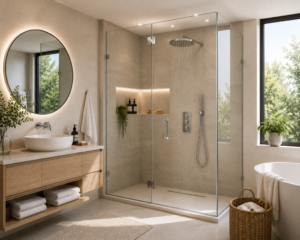
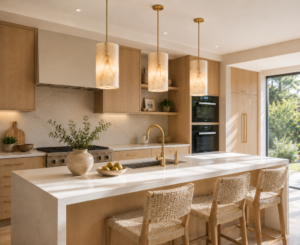
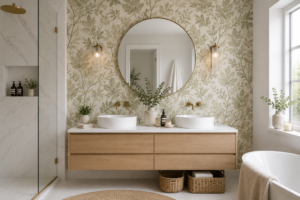


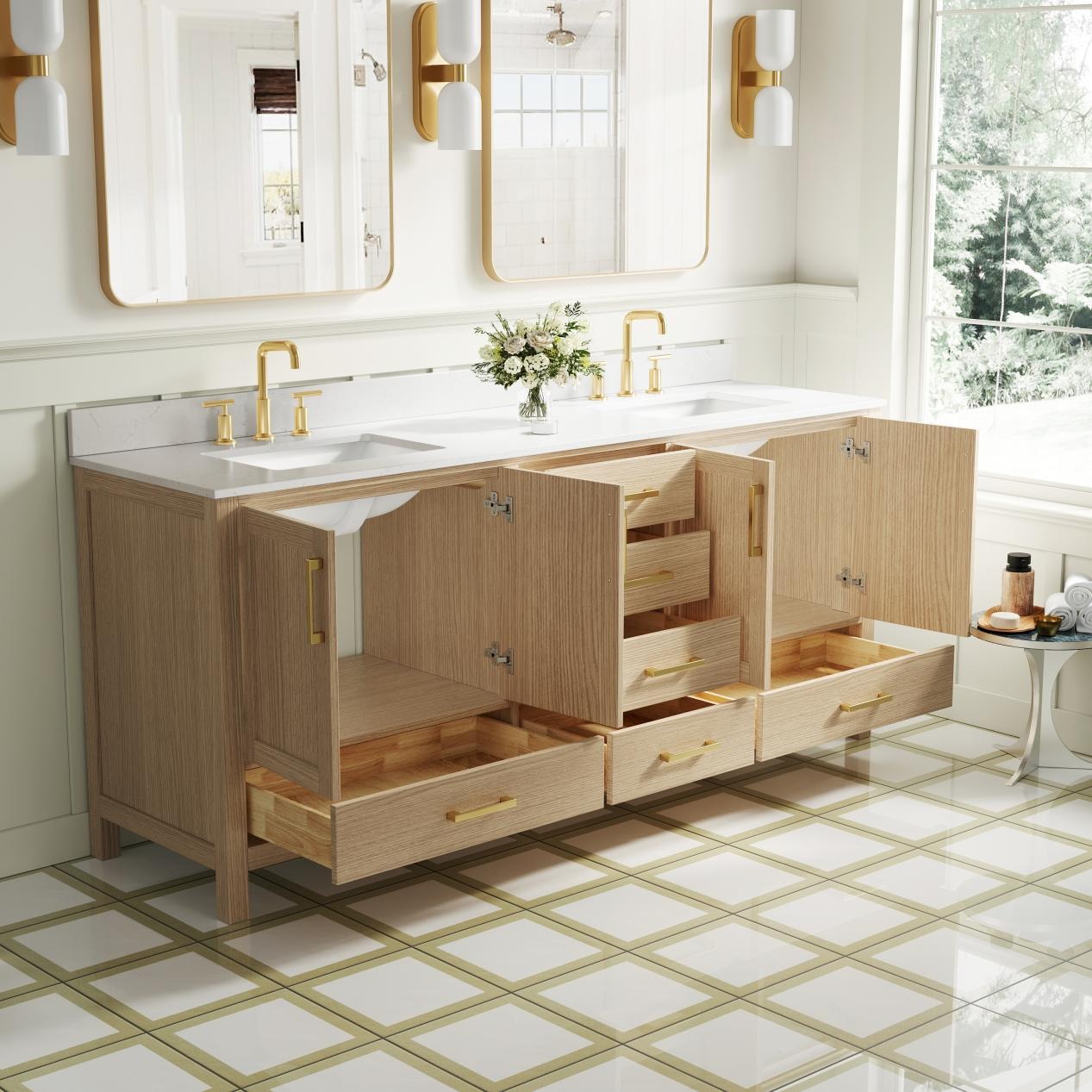
In the home decoration market, light wood vanities for bathrooms are becoming one of the fastest-growing design elements in recent years. From white oak to light walnut, and then to natural oak grain, consumers’ preference for natural materials and warm tones continues to increase. According to the, “2024 US Bathroom Decoration Trends Report” released by Houzz, wood color has become the top color category for consumers when choosing bathroom cabinets, accounting for 26%, surpassing traditional white and gray vanities.
Industry insiders believe that the popularity of light wooden bathroom vanities not only reflects consumers’ pursuit of naturalistic design but also represents the transformation of bathroom spaces from “functional spaces” to “healing spaces”.
So, in the current market environment, which color is most suitable for matching light-colored wooden bathroom vanities?
Why light colored wood has become mainstream in the market
Data show that over 76% of bathroom renovation projects replace bathroom cabinets, and the wood-grain color scheme has been steadily growing for many years. In 2022, 30% of homeowners chose wooden-toned bathroom vanities; by 2024, natural wood colour was still maintaining its leading position.
Designers point out that light colored wood has three major advantages:
- It creates a warm and natural spatial atmosphere
- It can enhance the visual transparency of small bathrooms
- It’s compatible with modern, Nordic, Japanese, and contemporary farmhouse styles
At the same time, the residential design industry is gradually moving away from the popular cold grey palette of the past decade towards warmer natural wood and earth tones.
First Choice: Warm white


From a market acceptance perspective, warm white remains the safest and most popular combination for light-colored wooden bathroom cabinets.
Warm white walls can highlight the wood texture to the fullest and enhance the space’s brightness. Compared to cool white, warm white has a beige or cream tone, which naturally echoes the yellow and brown elements in the wood.
Houzz data shows that white and off-white are still the most common color combinations for bathroom walls and countertops, occupying an absolute dominant position.
It has become a classic configuration in new residential and renovation projects, with combinations such as:
- White oak bathroom cabinets and cream white walls create a warm, timeless colour palette that highlights the natural beauty of the wood grain while reflecting light around the room, resulting in a bright, welcoming space that feels both elegant and relaxing.
- Light wood cabinets and white quartz stone countertops combine the warmth and texture of natural timber with the clean, crisp appearance of quartz, creating a fresh contemporary look that feels spacious, sophisticated, and easy to coordinate with a wide range of bathroom styles and finishes.
- Light wood vanities paired with warm white subway tiles and brushed brass fixtures create a timeless look that works equally well in contemporary, Scandinavian, and transitional bathrooms.
- Natural oak cabinets combined with warm white walls and light stone flooring help maximise the sense of space, making smaller bathrooms feel brighter and more open.
- White oak vanities complemented by warm white wall paint and soft beige textiles introduce subtle layers of texture while maintaining a calm, cohesive colour palette.
Designers often favour warm white because it offers exceptional flexibility. Unlike cooler whites, which can sometimes make natural wood appear stark or washed out, warm whites help showcase the richness of the grain while creating a softer, more inviting atmosphere. This versatility allows you to update accessories, hardware, and décor over time without needing to change the overall colour scheme.
Second Choice: Sage green

If warm white represents classics, then sage green represents current trends.
In recent years, consumers’ demand for natural healing styles has significantly increased. Multiple design agencies have listed sage green as one of the most popular bathroom colors from 2025 to 2026.
Color psychology research shows that green is a calming and relaxing colour, that helps create a sense of balance; light wood color can increase spatial temperature. The combination of the two can significantly enhance the comfort experience in a room and are perfect for a relaxed “spa bathroom” style.
For example:
- Sage green wall tiles, whether used as a full feature wall, shower surround, or decorative splashback, pair beautifully with light wood bathroom cabinets by creating a natural, organic colour palette that feels calm, fresh, and effortlessly sophisticated.
- Sage green accessories such as towels, soap dispensers, storage baskets, artwork, and indoor plants can introduce subtle touches of colour throughout the room, helping to reinforce the spa-like atmosphere without overwhelming the light and airy design.
- Sage green floor tiles or patterned flooring can provide a gentle foundation for the space, complementing the warmth of light wood cabinetry while adding depth, texture, and visual interest that enhances the bathroom’s overall sense of comfort and relaxation.
In high-end residential projects on the West Coast and Northeast, “white oak and sage green” has become one of the most common combinations.
Third Choice: Beige and milk coffee color

With the rise of the concept of ‘Chromatic Neutral’, traditional gray is gradually being replaced by beige, milk coffee, and light camel colours.
For example:
- Beige walls create a soft and seamless transition between the natural wood tones of the vanity and other bathroom finishes, helping to establish a warm, welcoming atmosphere while allowing the wood grain to remain a prominent design feature.
- Milk-coffee-coloured ceramic tiles introduce additional depth and visual interest to the room, creating subtle layers of colour and texture that enhance the overall sense of sophistication without overwhelming the space.
- Camel-coloured soft furnishings, such as towels, bath mats, window treatments, or upholstered seating, add richness and understated luxury while reinforcing the warm, earthy palette that defines contemporary bathroom design.
Designers generally believe that this type of color has a more lively atmosphere than pure white and is more in line with contemporary consumers’ understanding of “warm modernism”.
Especially in the mid to high-end residential market, a large number of projects have begun to adopt white oak cabinets, with light beige walls and cream coloured stone countertops. Together they build a unified natural colour scheme.
Fourth Choice: Light blue

Blue has always been a classic color in bathroom design.
Due to the natural association between water and blue, many designers tend to use light blue to enhance the bathroom’s refreshing feel.
For light colored wooden bathroom vanities:
- Sky blue introduces a light, airy coastal character that evokes clear summer skies and seaside retreats, making it an ideal choice for homeowners who want to create a relaxed, tranquil bathroom with a bright and uplifting atmosphere.
- Grey-blue tones complement light wood vanities particularly well in contemporary and minimalist interiors, offering a sophisticated balance between warmth and coolness while maintaining the clean, uncluttered aesthetic associated with modern design.
- Haze blue adds subtle depth and visual texture to the space, creating a layered and refined appearance that feels softer than stronger blue shades while still bringing a sense of freshness and calm to the overall design scheme.
For projects Florida, California, and coastal areas, the combination of light wood and blue has remained in high use for a long time.
This combination can achieve a balance between naturalness and modernity.
Fifth Choice: Dark accent color

Although the overall trend is towards light colors, dark accents are becoming a hot topic in the industry too.
For example:
- Matte black hardware, including taps, cabinet handles, shower fittings, and towel rails, creates a bold visual contrast against light wood cabinetry, helping to define the vanity area while introducing a contemporary designer-inspired aesthetic.
- Dark grey mirror frames, lighting fixtures, and decorative accents add depth and structure to the bathroom, creating clear focal points that balance the softness of natural wood tones and lighter wall colours.
- Deep blue storage cabinets or feature units introduce a rich layer of colour that complements the warmth of light wood while adding character, sophistication, and a sense of individuality to the overall design scheme.
Together, these darker accent elements provide visual contrast and definition, preventing the space from feeling overly uniform while allowing the natural beauty of the light wood vanity to remain the focal point of the room.
In design forums and home decor communities, many people have noted that combining light wood tones with black hardware can effectively enhance the overall sense of luxury while avoiding the space from appearing too monotonous.
What do industry professionals think?

The bathroom design industry generally believes that bathroom spaces will continue to develop towards “naturalization” and “healing” in the next five years.
According to Houzz’s research data, 76% of homeowners will upgrade their bathroom vanities and 61% of consumers choose customized or semi-customized products.
Wooden cabinets have become one of the most popular choices for bathroom vanities and the design trend is gradually shifting from cool gray colour schemes to more natural and earthy options.
Conclusion
From the perspective of comprehensive market data and design institutions, the best-matching colors for light-colored wooden bathroom vanities are warm white, sage green, milk coffee beige, light blue, and dark accents.
Among them, warm white is still the solution with the highest market coverage and widest acceptance. Sage green, on the other hand, is considered the most promising popular color for growth in recent years. As consumers increasingly value natural materials, healthy living, and emotional appeal, the combination of light-colored wooden bathroom cabinets and natural color schemes is expected to maintain strong growth momentum after 2026, becoming the core direction of modern bathroom design.
0
Related
Read the full article here


