






A coffee table can bring the different elements of a living room together while providing a practical surface for everyday use. It can hold drinks, books and decorative pieces, keeping frequently used items within easy reach. When exploring coffee tables in Cockburn, look beyond appearance and consider factors such as size, height, shape, material and storage. These details can influence how well the table works with existing furniture and how comfortable the overall space feels.
Why the Right Coffee Table Matters
A coffee table is often positioned at the centre of a seating area, so its proportions can have a noticeable effect on the room. A table that is too large may restrict movement, while one that is too small can leave the seating arrangement looking disconnected.
The right coffee table provides an accessible surface without getting in the way of people moving around the room. It can also help define the seating area, particularly in open-plan spaces where furniture needs to create a clear sense of arrangement.
Style is another consideration. The table should work with the sofa, flooring and other furnishings rather than looking like a separate addition. For example, a timber table can suit a relaxed interior, while glass or metal may be better suited to a contemporary setting.
Key Factors to Consider When Selecting a Coffee Table
Before choosing a coffee table, consider how the table will be used, how much space is available and how it relates to the surrounding furniture. A good-looking table may not be the right option if it makes the room difficult to use.
Coffee Table Size and Dimensions
Start by measuring the available floor space. The length and width of the coffee table should relate to the size of the sofa and seating arrangement. A useful starting point is to select a table that is around two-thirds the length of the sofa. This generally gives the table enough presence without making it dominate the seating area.
The table’s depth is another important factor to assess. A wider design can work well in a spacious living room, while a narrower option may be more suitable for a compact area. Measure the space between the seating and allow enough room for walkways before selecting a table.
Height and Proportion
Coffee table height affects both comfort and the overall look of the living room. In most spaces, the tabletop should be close to the sofa seat height, with a slightly lower design often offering greater practicality. This makes drinks, books and other everyday items easier to reach while seated.
The table should also look balanced beside the sofa. A very low table paired with high seating can feel out of proportion, while a tall table may interfere with the relaxed nature of the seating area. Consider the height of the sofa, armchairs and any nearby furniture as a group rather than assessing the table on its own.
Shape and Room Layout


The shape of a coffee table should reflect the layout and amount of available floor space. Rectangular tables are a popular option for longer sofas, as their proportions can work well with wider seating arrangements.
Round and oval tables can be useful where movement around the furniture is important. Their curved edges can also work well in rooms with smaller walkways or several seating pieces. Square tables may suit larger, balanced seating arrangements, particularly where sofas or lounges face each other.
Material and Finish
The material of a coffee table can influence how it works with the surrounding furniture. Timber can add warmth to a living room, while glass or metal can create a lighter, more contemporary look. If the room includes leather lounges, consider whether you want the coffee table to complement the richness of the upholstery or create contrast through a different texture or finish.
Functionality and Storage Needs
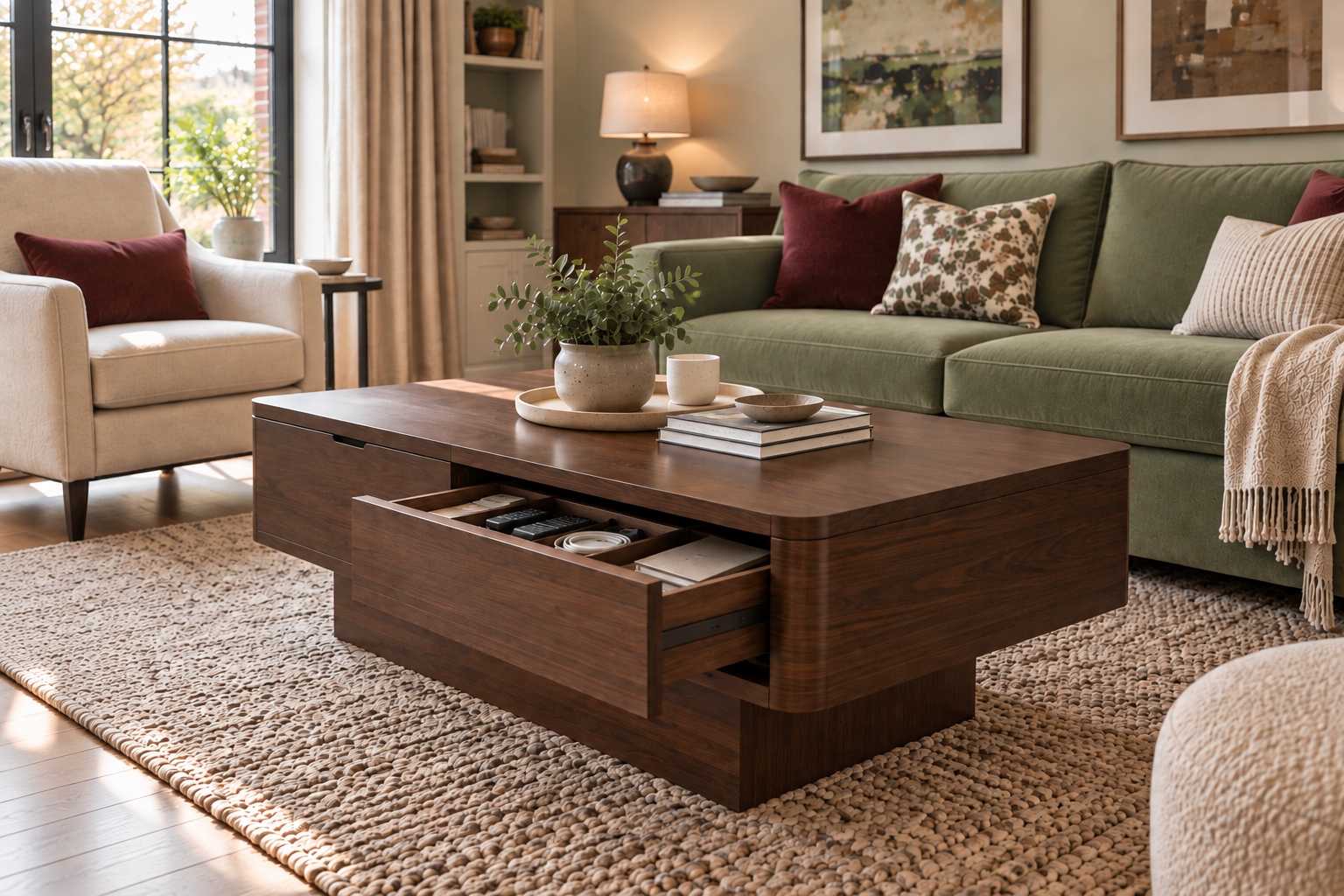
A coffee table can provide useful storage as well as a surface for drinks, books and decor. Open shelving keeps frequently used items within reach, while drawers and cupboards are better for storing smaller belongings out of sight.
The right design depends on how the table will be used. A simple tabletop may suit a room with enough storage, while drawers, shelving or a lift-top design can provide extra space for everyday items or occasional laptop use.
Conclusion
Selecting a coffee table involves more than finding a design that looks good. Size, height, shape, material and functionality all affect how well the table works within a living room. Taking measurements and considering the existing seating arrangement can make it easier to find a table that suits the available space.
A well-proportioned coffee table should provide enough surface area for everyday needs while leaving comfortable room for movement. With the right combination of practicality and design, it can become a useful part of the living room rather than simply another piece of furniture.
Frequently Asked Questions

What size coffee table is best for a living room?
A coffee table should be proportionate to the sofa and leave enough space for comfortable movement. The ideal size depends on the room layout, seating arrangement and available floor space.
How high should a coffee table be compared with a sofa?
A coffee table generally works best when it is around the same height as the sofa seat or slightly lower. This provides comfortable access to the tabletop without making the table feel too tall.
Which coffee table shape works best for different living room layouts?
Rectangular tables suit longer sofas and larger seating areas, while round and oval designs can work well where movement around the table is important. Square tables are often suitable for balanced seating arrangements.
What material is best for a durable coffee table?
The best material depends on the table’s daily use, maintenance needs, durability requirements and the style of the living room.
How much space should be left between a sofa and coffee table?
Leave enough space between the sofa and coffee table for comfortable movement and easy access to the tabletop. The gap should feel open without placing the table too far from the seating area.
0
Related
Read the full article here


