


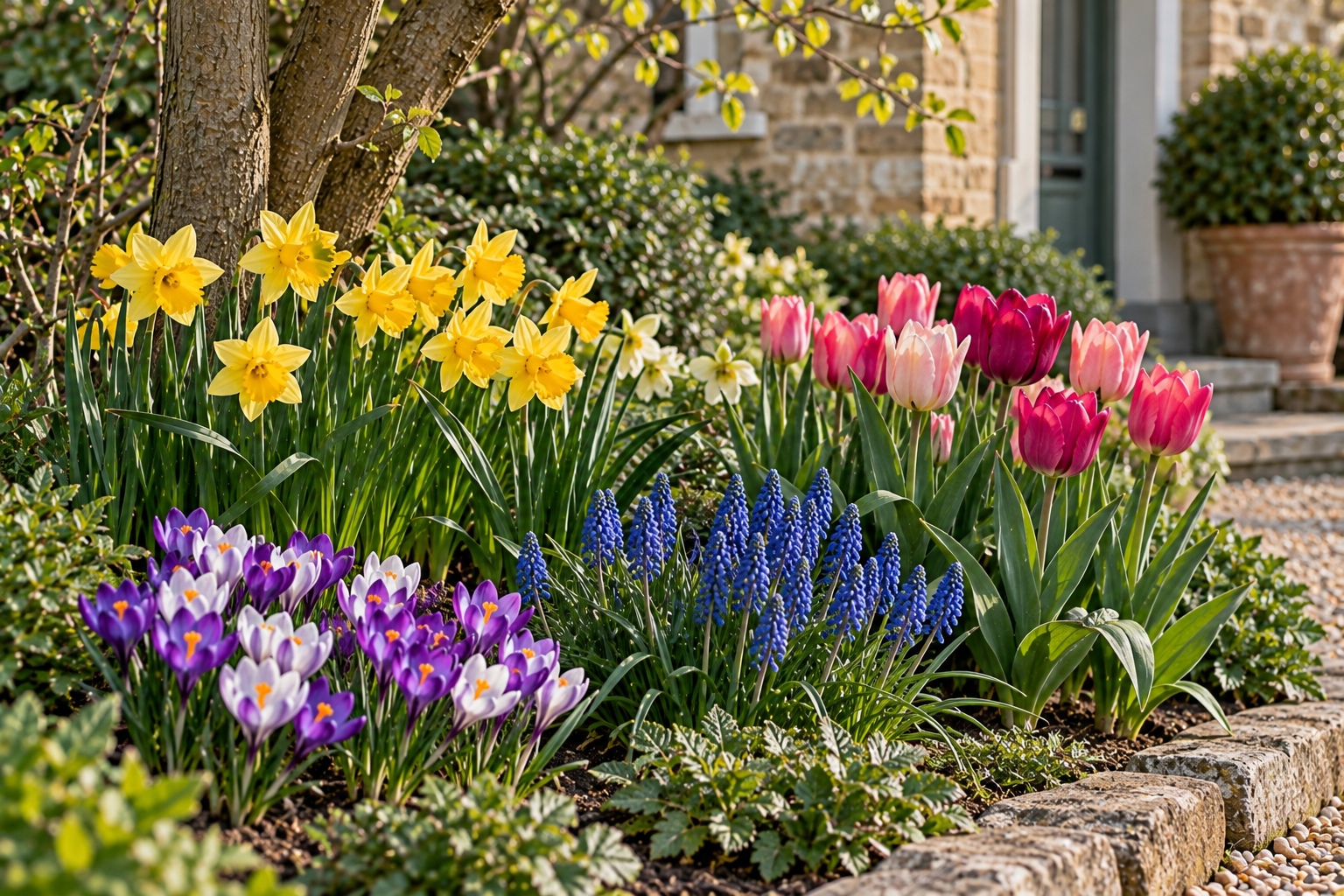
There’s something wonderfully optimistic about planting spring bulbs in autumn. Just as the garden begins to slow down and summer colour disappears, you can start planning for the flowers that will bring it back to life next year.
Tulips, daffodils, crocuses, hyacinths, alliums and many other spring-flowering bulbs are planted months before they appear. Hidden beneath the soil through winter, they quietly establish themselves before emerging as temperatures begin to rise.
The good news is that planting spring bulbs is one of the easiest autumn gardening jobs. You don’t need a large garden or specialist equipment, either. Bulbs can be planted in borders, lawns, raised beds and containers, making them suitable for gardens of almost any size.
If you’re wondering when to plant spring bulbs, how deep they should go or which bulbs to choose, this simple guide covers everything you need to know.
Quick Answer: When Should You Plant Spring Bulbs?
Most spring-flowering bulbs are planted during autumn, usually between September and November in the UK.
As a general guide:
- Daffodils and narcissi: September to October
- Crocuses: September to November
- Hyacinths: September to November
- Alliums: September to November
- Muscari (grape hyacinths): September to November
- Snowdrops: October to November for dry bulbs
- Tulips: October to November, with November often ideal
The exact timing isn’t critical. If you discover an unopened packet of bulbs later than planned, they’re usually better planted than left sitting in the packet. As long as the soil isn’t frozen or waterlogged, late planting can still be worthwhile.
Why Are Spring Bulbs Planted in Autumn?
Spring bulbs need time underground before they flower.
Planting during autumn allows bulbs to begin developing roots while the soil is still relatively warm. They then experience the colder conditions of winter before growth accelerates again as spring approaches.
The bulb itself acts as a miniature store of energy. It contains much of what the plant needs to produce its first leaves and flowers, which is one reason bulbs can create such impressive displays with relatively little effort from the gardener.
Autumn planting also allows you to fill areas that can otherwise look rather bare early in the year. By the time many herbaceous perennials are only just waking up, spring bulbs can already be providing plenty of colour.
When Is the Best Time to Plant Daffodils?

Daffodils are among the earlier bulbs to plant and are ideally put into the ground during September or October.
Planting them reasonably early gives their roots plenty of time to establish before winter. However, don’t worry if October slips into November before you get around to the job. Late-planted daffodils can still grow and flower.
Daffodils work particularly well planted beneath deciduous trees and shrubs, through lawns, at the front of borders and in pots.
They’re also excellent bulbs for naturalising. Choose suitable varieties and leave them undisturbed after flowering, and the display can gradually increase over the years.
When Should You Plant Tulip Bulbs?
Tulips are slightly different from many other spring bulbs because there’s usually no need to rush to plant them at the beginning of autumn.
October and November are good months for planting tulips, with November often regarded as an excellent time to get them into the ground.
Waiting until the soil has cooled can help reduce the risk of problems such as tulip fire, a fungal disease that can affect leaves, stems and flowers.
Tulips are particularly effective in containers because pots allow you to create concentrated displays of colour. They’re equally useful in borders, where they can be planted between perennials that will later disguise fading tulip foliage.
Don’t Forget Smaller Spring Bulbs
Tulips and daffodils may get much of the attention, but some of the most charming spring displays come from smaller bulbs.
Crocuses can provide splashes of purple, yellow and white from late winter onwards, while grape hyacinths produce distinctive clusters of blue flowers.
Other possibilities include scillas, chionodoxas, iris reticulata and anemones.
These smaller bulbs are particularly useful around the front of borders, beneath deciduous shrubs and trees, in gravel gardens and in containers. Many can also be allowed to naturalise, gradually creating larger colonies.
How to Choose Healthy Bulbs

When buying bulbs, look for ones that feel firm, plump and relatively heavy for their size.
Avoid bulbs that are very soft, badly damaged or showing obvious signs of rot or mould. A little loose, papery outer skin is usually nothing to worry about.
Larger bulbs will often produce stronger initial displays, although size naturally varies considerably between different species and varieties.
Once you’ve bought your bulbs, try to plant them reasonably promptly. Store them somewhere cool, dry and well ventilated until you’re ready.
Where Should You Plant Spring Bulbs?
Most spring-flowering bulbs perform best in a position with good drainage.
This is especially important during winter. Bulbs sitting in persistently wet soil are more likely to rot.
Many popular bulbs enjoy sun, but that doesn’t mean every bulb needs an exposed, south-facing position. Spring bulbs can work extremely well beneath deciduous trees and shrubs because they receive plenty of light before the leaves above fully emerge.
Think about what the surrounding garden will look like when the bulbs flower, rather than simply how the space looks while you’re planting them.
A seemingly empty patch of soil in October could be surrounded by emerging perennials by April.
How Deep Should You Plant Spring Bulbs?
One of the easiest rules to remember is to plant bulbs at a depth of roughly two to three times the height of the bulb.
For example, a bulb measuring 5cm from top to bottom might be planted approximately 10–15cm deep.
This is a general rule rather than an exact measurement, so always check the instructions supplied with a particular variety if you’re unsure.
As a rough guide:
| Bulb | Approximate planting depth |
|---|---|
| Crocus | 5–10cm |
| Muscari | 8–10cm |
| Daffodil | 10–15cm |
| Tulip | 10–15cm |
| Hyacinth | 10–15cm |
| Allium | Around 3 times the bulb’s depth |
Very large allium bulbs may need to be planted considerably deeper than small varieties.
Which Way Up Should Bulbs Be Planted?
Most bulbs have a fairly obvious pointed end, which should face upwards, while the flatter basal plate where the roots develop sits at the bottom.
But sometimes it isn’t obvious.
If you genuinely can’t work out which way up a bulb should go, don’t panic. Plant it on its side. The emerging shoot will usually find its way upwards.
How to Plant Bulbs in Garden Borders

Planting bulbs in an existing border is straightforward.
First, decide where you want the flowers to appear. Rather than placing bulbs in rigid rows, try arranging them in informal groups or drifts for a more natural effect.
Place the bulbs on the soil before planting so you can adjust the arrangement.
Use a hand trowel or bulb planter to create holes at the appropriate depth. Position each bulb with its pointed end upwards, replace the soil and gently firm it down.
If the soil is dry, you can water the area after planting. During a typically wet British autumn, however, additional watering may not be necessary.
One useful trick is to plant bulbs among established perennials. The bulbs provide early colour, while the emerging perennial foliage later helps conceal their leaves as they die back.
How to Create a Natural-Looking Bulb Display
For a relaxed, naturalistic effect, avoid planting every bulb at identical intervals.
One traditional method is to take a handful of bulbs and gently scatter them across the planting area. Plant each bulb approximately where it lands.
This creates irregular spacing that can look much more convincing than carefully measured rows.
For greater impact, use generous groups of the same variety rather than planting lots of individual varieties separately around the garden.
Repeating the same bulb in several areas can also help visually connect different parts of the garden.
How to Plant Spring Bulbs in Pots
You don’t need flower beds to enjoy spring bulbs. Containers are ideal for patios, balconies, doorsteps and small gardens.
Choose a pot with drainage holes and fill it with a suitable peat-free compost. Arrange the bulbs reasonably close together without allowing them to touch.
Because container displays are temporary, bulbs can often be planted more densely than they would be in a border.
Cover them with compost, water them in and position the container somewhere appropriate for the varieties you’ve chosen.
Remember that pots can dry out even during autumn and winter, particularly when they’re positioned beneath a porch or against a sheltered wall. Check the compost occasionally and water if necessary, while avoiding keeping it permanently saturated.
Try a ‘Bulb Lasagne’ for Months of Colour

If you want to fit lots of flowers into one container, try making a so-called bulb lasagne.
Despite the name, there’s no pasta involved! It’s simply a way of layering different bulbs within the same pot.
Place the largest and latest-flowering bulbs, such as tulips, towards the bottom. Cover them with compost before adding another layer of bulbs, perhaps daffodils or hyacinths. Smaller early bulbs such as crocuses or muscari can go nearer the top.
Stagger the bulbs so those on the upper layers aren’t sitting directly above the ones below.
With careful variety selection, one container can produce successive waves of flowers from late winter well into spring.
Planting Bulbs in a Lawn

Spring bulbs can look beautiful growing through grass, particularly crocuses and daffodils.
For an informal appearance, scatter bulbs over the lawn and plant them where they fall.
Individual holes can be made with a bulb planter, or sections of turf can be lifted if you’re planting larger groups.
The main consideration comes after flowering.
Bulb foliage needs time to die back naturally because the leaves continue photosynthesising and help replenish the bulb’s energy reserves for the following year.
This means you shouldn’t mow the area immediately after flowering. Wait until the foliage has yellowed and died back before cutting it.
For that reason, naturalised bulbs tend to work better in areas of lawn where you’re happy to tolerate slightly longer grass for part of the spring.
What Type of Soil Do Spring Bulbs Need?
The biggest requirement for most bulbs is free-draining soil.
If you garden on heavy clay that becomes very wet during winter, consider improving the soil structure with organic matter and choosing planting positions that don’t remain waterlogged.
Alternatively, grow more vulnerable bulbs in containers where drainage conditions are easier to control.
Many common spring bulbs are surprisingly adaptable, though, and don’t require perfect soil to produce a good display.
Should You Add Fertiliser When Planting Bulbs?
Bulbs already contain stored nutrients, so they don’t necessarily need lots of fertiliser when they’re first planted.
Improving poor soil with well-rotted organic matter can help, and an appropriate bulb fertiliser can be used according to the manufacturer’s instructions if required.
Avoid placing concentrated fertiliser directly against bulbs, as this may damage developing roots.
For bulbs that you hope will return year after year, feeding becomes particularly useful after flowering, when the plant is building up reserves for the following season.
Should Spring Bulbs Be Watered After Planting?

Bulbs planted in dry soil can be watered after planting to help settle the soil around them.
After that, bulbs growing in the ground will generally receive sufficient moisture from autumn and winter rainfall in much of the UK.
Containers need a little more attention because compost can dry out faster than garden soil. Equally, don’t allow pots to become waterlogged. Good drainage is essential.
Can You Plant Spring Bulbs Too Late?
Ideally, bulbs should be planted during their recommended autumn window, but missing the ideal date doesn’t necessarily mean you’ve missed your chance altogether.
If it’s December and you’ve just discovered a bag of forgotten tulips or daffodils, check their condition.
If the bulbs are still firm and healthy, plant them rather than storing them until the following autumn.
They may flower later or less vigorously during their first season, but bulbs left unplanted for many months are unlikely to improve.
The main exceptions are periods when the ground is frozen solid or extremely waterlogged. In those conditions, wait until the soil becomes workable again or consider planting suitable bulbs into containers.
How to Protect Bulbs from Squirrels and Other Wildlife
Anyone who has carefully planted a container of bulbs only to discover holes in the compost the following morning will know that gardeners aren’t the only ones interested in bulbs.
Squirrels can be particularly troublesome with freshly planted tulips and crocuses.
Placing wire mesh over the surface of pots or newly planted areas can help deter digging. The mesh can be removed once shoots are well established.
Daffodils are generally less attractive to squirrels and rodents than some other bulbs.
Avoid relying on potentially harmful homemade deterrents where pets or wildlife could come into contact with them.
What Happens After Spring Bulbs Flower?
Once the flowers fade, resist the temptation to immediately cut off all the leaves.
The foliage needs to remain in place while it is green because it’s helping the bulb store energy for next year’s flowers.
You can remove spent flowers if you wish, particularly from tulips and daffodils, but allow the leaves to yellow and die back naturally.
It may not be the prettiest stage of the bulb-growing cycle, which is another reason planting bulbs among later-emerging perennials works so well.
As hostas, hardy geraniums, ornamental grasses and other plants develop, they can gradually disguise the fading bulb foliage.
Which Spring Bulbs Come Back Every Year?

If you’d like a relatively low-maintenance display, choose bulbs with a good reputation for returning and naturalising.
Daffodils are particularly dependable, while crocuses, muscari, snowdrops and many smaller species bulbs can gradually spread when conditions suit them.
Alliums can also return reliably in well-drained positions.
Tulips are more variable. Some types flower successfully for several years, while many highly bred varieties are at their best during their first spring and may produce smaller or fewer flowers in subsequent years.
If longevity matters, look for tulip varieties specifically recommended for perennialising.
Planning Bulbs for Continuous Spring Colour
Rather than choosing bulbs purely by colour, pay attention to flowering time.
A carefully planned selection can provide flowers for several months.
You might start with snowdrops, crocuses and early irises in late winter, followed by daffodils and hyacinths. Tulips can then dominate from mid to late spring, with ornamental alliums carrying the display towards early summer.
Even within one type of bulb, varieties can flower at different times.
Combining early, mid-season and late tulips, for example, can extend the display considerably.
Easy Spring Bulbs for Beginners

If you’re planting bulbs for the first time, you don’t need dozens of different varieties.
A simple combination might include:
- Daffodils for reliable early spring colour
- Crocuses for late-winter and early-spring interest
- Muscari for compact blue flowers
- Tulips for strong mid-to-late spring colour
- Alliums to extend the display towards summer
Choose colours that complement one another and repeat varieties rather than buying one or two bulbs from lots of unrelated collections.
The result will usually look more intentional and cohesive.
Common Bulb Planting Mistakes to Avoid
Spring bulbs are forgiving, but a few simple mistakes can reduce their chances of performing well.
Planting too shallowly: Bulbs planted very close to the surface can be more vulnerable to weather and disturbance. Follow the recommended depth for the variety.
Choosing waterlogged ground: Persistent winter wet is one of the biggest problems for many bulbs.
Planting too sparsely: A handful of bulbs scattered over a very large border can disappear visually. Groups and drifts generally create greater impact.
Cutting foliage off too soon: Leave the leaves until they’ve naturally yellowed so the bulb can replenish its energy.
Forgetting about flowering times: Choosing early, mid and late varieties will give you a much longer season of colour.
Leaving bulbs in their packets for too long: Once you’ve bought them, aim to get them planted during autumn rather than waiting for the perfect gardening day.
A Little Autumn Effort for a Colourful Spring
Planting spring bulbs is one of those gardening jobs where a relatively small amount of effort can produce an impressive result.
An hour or two spent planting bulbs on a cool autumn afternoon can translate into weeks of flowers just when the garden needs them most.
You don’t have to redesign an entire border, either. Start with a pot of tulips by the front door, a cluster of daffodils beneath a tree or a handful of crocuses through the lawn.
Then comes the difficult part: forgetting about them for a few months.
By late winter and early spring, those first green shoots pushing through the soil provide a welcome reminder that the next gardening season is already on its way.
0
Related
Read the full article here