


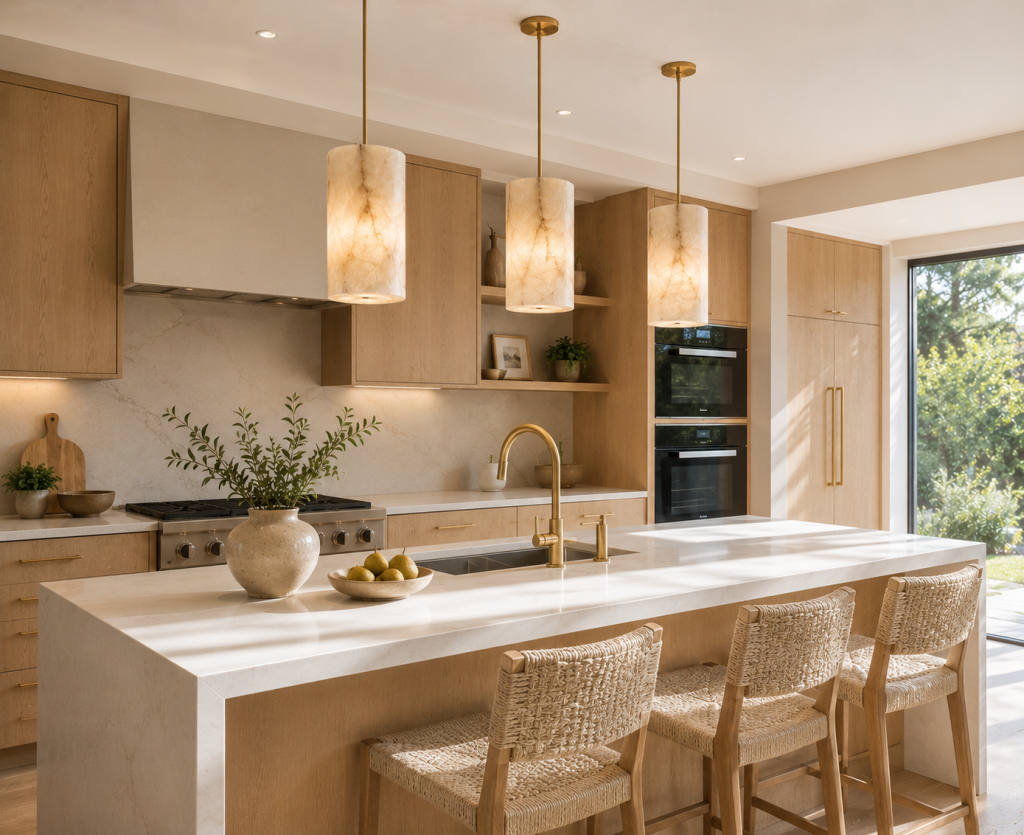
There are certain materials in the world of interior design that transcend trend cycles. They appear in ancient palaces and contemporary penthouses alike, valued across centuries not because they follow fashion but because they possess qualities that are genuinely, enduringly beautiful. Alabaster is one of those materials. Soft, luminous, naturally veined, and warm in a way that no synthetic material has ever quite replicated, alabaster has been treasured by designers, architects, and artisans for thousands of years. Today, its application in lighting design has reached a level of sophistication and accessibility that is introducing a new generation of homeowners and interior designers to its extraordinary visual properties — which is exactly why the alabaster lighting collection category has become one of the most sought-after and discussed segments of the contemporary lighting market.
Understanding what alabaster actually is, why it behaves so beautifully in lighting applications, and how it fits into the broader context of interior design helps explain not just the current enthusiasm for this material but also why that enthusiasm is likely to endure well beyond any particular design moment.
What Alabaster Actually Is
Alabaster is a naturally occurring mineral stone, most commonly a fine-grained form of gypsum, though a related variety made from calcite is also used in decorative applications. It has been quarried and worked by human hands for millennia — ancient Egyptians carved it into vessels and canopic jars, Renaissance sculptors used it for decorative reliefs, and craftsmen throughout Europe and the Middle East fashioned it into everything from architectural details to ornamental objects.
What makes alabaster distinctive among natural stones is its translucency. Unlike marble or granite, which are opaque, alabaster allows light to pass through it — and that property transforms the material entirely when a light source is placed behind or within it. Rather than simply reflecting light off its surface, alabaster glows from within, producing a warm, diffused illumination that has a quality unlike any other material in the lighting designer’s toolkit.
The natural veining and color variation within alabaster — ranging from pure creamy white to warm honey tones, soft grays, and occasionally deeper caramel or brown — means that every piece is genuinely unique. No two alabaster fixtures look exactly alike, because no two pieces of the stone are exactly alike. This inherent individuality is part of what makes alabaster objects and fixtures feel precious in a way that mass-produced materials simply cannot replicate.
Why Alabaster Works So Beautifully as a Lighting Material

The physics of alabaster’s interaction with light is what makes it so extraordinary in lighting applications. When light passes through alabaster, it is scattered and diffused by the stone’s fine crystalline structure, softening and warming the light in the process. The result is an illumination that is simultaneously substantial and gentle — present and impactful without being harsh or glaring.
This quality addresses one of the fundamental challenges in interior lighting design: how to provide meaningful illumination without the harshness that often comes with exposed bulbs or highly reflective surfaces. Alabaster essentially acts as a natural diffuser of extraordinary beauty — transforming what might otherwise be a simple point of light into a warm, glowing presence that enriches the entire space around it.
The warmth of alabaster’s light is not just aesthetic — it is genuinely more comfortable for human eyes and more flattering to human skin tones and interior surfaces than cooler, harder light sources. Rooms lit by alabaster fixtures have a quality of light that feels almost like candlelight elevated to architectural scale — warm, organic, and deeply pleasant to spend time within.
The Place of the Alabaster Lighting Collection in Contemporary Design

The resurgence of interest in natural materials across interior design has created the perfect conditions for alabaster’s current moment in lighting design. As contemporary interiors move away from the cold minimalism that dominated design aesthetics for much of the past two decades, toward spaces that feel warmer, more textured, and more humanly inhabited, alabaster has emerged as one of the most eloquent expressions of this shift.
An alabaster lighting collection typically encompasses a range of fixture types — pendants, chandeliers, wall sconces, table lamps, and flush or semi-flush ceiling fixtures — unified by the use of alabaster as the primary or significant secondary material. What distinguishes a well-curated collection from a simple assortment of fixtures is the coherence of design language across pieces — the way proportions, hardware finishes, and material treatments relate to one another so that different fixtures from the collection can be used together throughout a home without feeling disjointed.
This collection approach reflects a broader sophistication in how homeowners and designers now think about lighting. Rather than selecting fixtures independently with no relationship to one another, there is growing appreciation for the way a unified material language — in this case, the distinctive warmth and translucency of alabaster — creates visual continuity and coherence across different rooms and spaces within a home.
Historical Roots, Contemporary Expression
One of the most compelling aspects of alabaster in contemporary lighting design is the dialogue it creates between history and modernity. The material itself is ancient — its use in decorative arts predates recorded history in many cultures. And yet, when translated into the clean forms and refined proportions of contemporary fixture design, alabaster reads as thoroughly modern.
This is the hallmark of a truly timeless material: it doesn’t belong to any single era or style. A simple alabaster pendant with minimal hardware and clean geometric lines feels entirely at home in a contemporary kitchen or a Scandinavian-influenced living space. The same material, worked into a more elaborate form with decorative metalwork and classical proportions, suits a traditional or transitional interior with equal elegance. This versatility is rare and valuable — most decorative materials commit strongly to a particular aesthetic period or style. Alabaster seems equally comfortable across the entire spectrum.
Incorporating Alabaster Lighting Into Different Interior Environments

Understanding how to deploy alabaster lighting effectively within a space requires thinking about the material’s particular qualities and how they interact with other design elements in the room.
In living rooms, alabaster pendants or chandeliers positioned over a seating area create a warm focal point that anchors the space and establishes a quality of light that makes the room feel genuinely inviting. The diffused glow of alabaster works particularly well with natural textiles, warm wood tones, and organic textures — materials that share alabaster’s connection to the natural world.
In dining rooms, alabaster fixtures positioned over the table create a quality of light that is flattering both to the people seated at the table and to the food being served — an important and often underappreciated consideration in dining room lighting design. The warmth and diffusion of alabaster light makes meals feel more intimate and more special in a way that harsher overhead lighting simply cannot achieve.
In bedrooms, the gentle, diffused quality of alabaster lighting is particularly well-suited to the room’s function. Alabaster wall sconces flanking a bed, or a bedside table lamp with an alabaster shade, create the kind of warm, relaxing illumination that supports the wind-down process before sleep without the harshness that disrupts melatonin production and interferes with rest quality.
In entryways and hallways, a statement alabaster pendant or flush mount creates an immediate impression — communicating a design sensibility that values quality, natural materials, and thoughtful curation from the very first moment a visitor enters the home.
Caring for Alabaster Fixtures

Natural alabaster, while durable, does require some basic care to maintain its beauty over time. Because it is a porous stone, alabaster is susceptible to moisture damage and staining from cleaning products that are too harsh or acidic. Gentle dusting with a soft, dry cloth is the recommended regular maintenance approach. When deeper cleaning is needed, a very slightly damp cloth used carefully and dried promptly is generally safe. Avoiding exposure to excessive moisture — which makes alabaster lighting fixtures generally better suited to living areas, bedrooms, and dining rooms than to bathrooms or kitchens with heavy steam exposure — helps preserve the stone’s integrity over the long term.
The hardware components of alabaster fixtures — typically metal in brass, bronze, nickel, or iron finishes — can be maintained with appropriate metal-specific cleaners used carefully and kept away from the stone surface itself.
An Investment in Enduring Beauty

Unlike trend-driven decorative objects that feel fresh for a season and dated within a few years, an alabaster lighting collection represents the kind of investment that only becomes more appreciated over time. The material’s connection to natural history, its extraordinary interaction with light, its inherent individuality, and its remarkable versatility across design styles all point to a staying power that few materials in contemporary design can genuinely claim.
In a world where so much of what surrounds us is manufactured to be replaced, there is something deeply satisfying about bringing a material as ancient, as organic, and as genuinely beautiful as alabaster into the spaces where you live. The light it casts isn’t just illumination — it’s atmosphere, warmth, and a quiet reminder that the most enduring beauty has always come from the natural world.
0
Related
Read the full article here