






Do you look at your small garden or compact backyard and assume a hot tub is out of the question?
It’s a common assumption when space feels tight. Most people picture oversized, eight-person tubs dominating the entire patio, leaving no room for anything else. But the reality is far more flexible. Small gardens and hot tubs can work brilliantly together when you stop thinking in terms of limitations and start thinking about layout, scale and smart use of space.
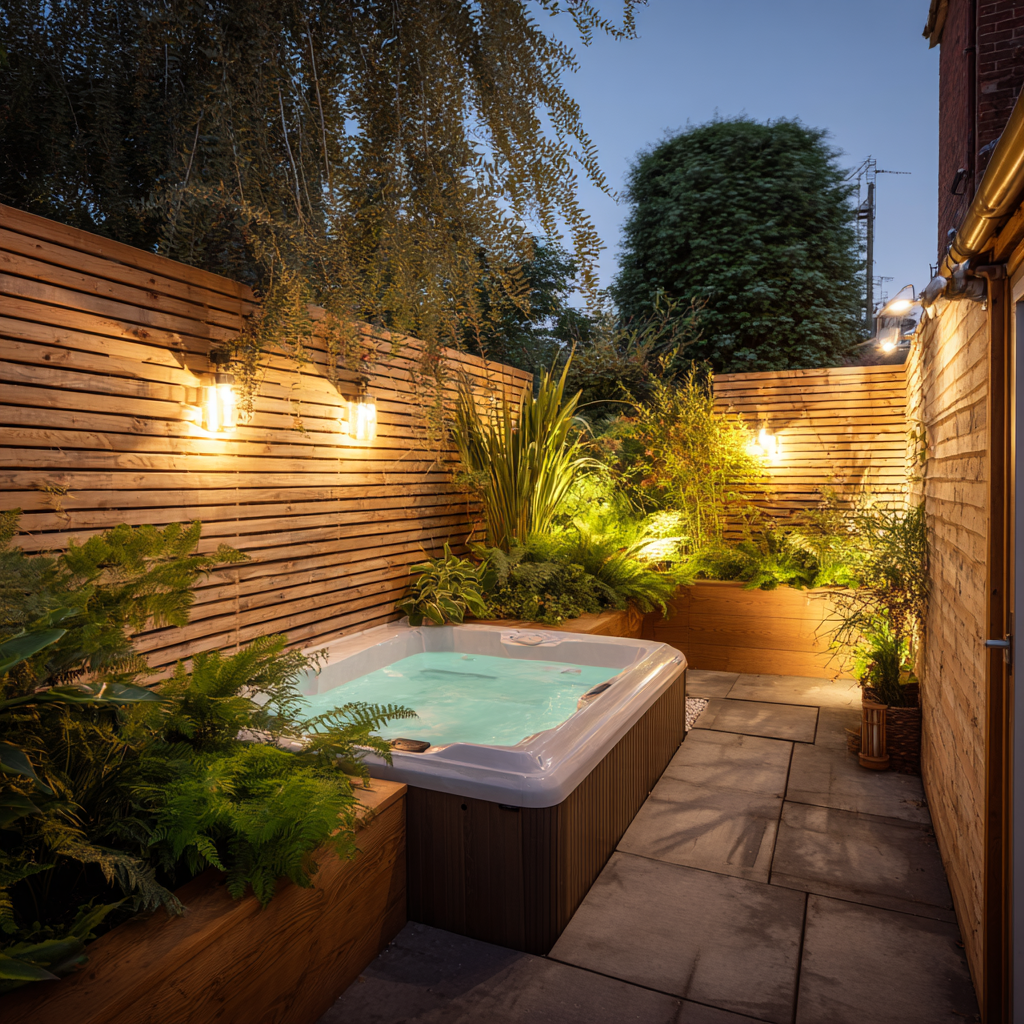
You don’t need a huge footprint to make it happen. A compact patio area can be enough. A narrow side garden, a tucked-away corner, even an awkward patch that never quite worked for anything else can be transformed into a relaxing spot to switch off at the end of the day. With more small hot tub ideas and designs now available than ever before, it’s much easier to find something that fits without overwhelming your garden or blowing your budget.
In this guide, we’ll look at the best small garden hot tub ideas for compact spaces, where to position your tub so it feels intentional rather than squeezed in, and the simple modern design details that help your garden feel calm, considered and just that little bit indulgent.
Choosing the Right Hot Tub Size for Compact Spaces
Most small garden hot tub failures happen before installation even begins.
People default to standard-sized models without considering how the footprint affects the entire garden. A hot tub that’s two feet too wide doesn’t just take up space, it kills the flow of your outdoor area and makes everything feel suffocated. The right size hot tub design opens up possibilities instead of closing them down.
Here’s what actually works in small gardens:
- Two-person loungers: Typically 5.5 to 6.5 feet long and 4 to 5 feet wide. Perfect for narrow side yards or corner installations where you need length but not width.
- Small hot tub: Small hot tubs, such as a small 2 person hot tub, range in size from 5 x 3.5 feet to 5 x 5 feet. Some are round in shape, whilst others are rectangular and provide a good balance between comfort and space-saving-design.
- Round four-person models: Usually 6 to 7 feet in diameter. These fit better in square or corner spaces and create better traffic flow around them than rectangular tubs.
- Compact square tubs: Around 5×5 or 6×6 feet. Ideal when you need to tuck a wooden hot tub against a wall or fence line without it jutting out awkwardly into the garden.
- Plug-and-play inflatable options: 4 to 6 feet across when inflated. Not as durable as hard-shell models, but they work when you’re renting or need seasonal flexibility.
The biggest mistake is thinking bigger always means better. A properly sized compact tub with quality jets beats an oversized tub crammed into a space where you can barely walk around it. Measure your available area, subtract two feet on all accessible sides for maintenance access and visual breathing room, then shop based on what’s left. If that calculation gives you 5×5 feet of usable tub space, own it and find the best compact model instead of forcing a 7-foot tub into a space that can’t handle it.
Your garden should still feel like a garden after installation, not a hot tub surrounded by a thin strip of grass.
Strategic Placement That Maximizes Space


Where you put a hot tub in your small space garden matters more than what tub you buy.
Bad placement makes even the smallest hot tub feel like it’s consuming your entire garden. Smart placement creates zones, improves privacy, and can actually make your outdoor space feel larger than it did before. The goal is integration, not domination.
Corner installations are your best friend in tight spaces. Tucking a hot tub into a 90-degree corner created by fences, walls, or garden boundaries uses dead space that’s rarely functional for anything else. This positioning is an ideal location as it also naturally creates privacy on two sides and opens up the center of your garden. Add a small deck or stone platform that wraps the corner, and suddenly you have a defined spa zone without sacrificing your main garden area.
Against a fence or wall works when you have a long, narrow garden. Position the tub along the length of one boundary, ideally the one that gets the most privacy or the best views. This keeps the center of your garden open and creates a natural flow from your door to the tub. The key is building a narrow pathway alongside it so you’re not forcing people to walk through planted areas or across the lawn to access it.
A sunken hot tub or semi-sunken installations are worth considering if you’re dealing with a sloped garden or you want to minimize visual bulk. Dropping the tub even 12 to 18 inches below grade level reduces its profile dramatically and makes the space feel less cluttered. You’ll need proper drainage and potentially a retaining wall, but the payoff is a hot tub that feels built into the landscape instead of plopped on top of it.
Elevated deck platforms can work in small spaces if you design them right. A low deck that’s just 8 to 12 inches off the ground provides a solid base, improves drainage, and creates a defined spa area without requiring multiple steps or railings that eat up space. Keep the deck footprint tight to the tub, maybe 18 inches beyond the shell on accessible sides, and use composite or hardwood that complements your garden rather than competing with it.
Don’t block access to the rest of your garden or position the tub where it cuts off natural pathways. You want your hot tub to feel like a destination within the garden, not an obstacle you have to navigate around.
Is Your Garden Suitable? A Quick Checklist

Before you commit, it’s worth stepping back and checking the basics. A hot tub doesn’t need a huge space, but it does need the right conditions.
- Do you have at least 5×5 feet of clear, level space?
- Can you safely run electricity to that part of the garden?
- Is there adequate drainage so water won’t pool around the base?
- Can you create privacy from at least one key angle?
- Will it block how you normally move through your garden?
- Is the ground or structure strong enough to support the weight?
If you can tick most of these off, you’re in a good position to make it work. If not, it doesn’t mean it’s impossible, just that a bit more planning is needed before you dive in.
Planning Permission and Practical Considerations

In most cases, adding a hot tub to your garden in the UK won’t require planning permission, especially if it’s a freestanding unit. But there are a few practical details worth keeping in mind when you’re planning your backyard projects.
If you’re building raised decking, adding tall structures, or installing screens close to a boundary, local rules can sometimes apply. It’s always worth double-checking if your design pushes height limits or alters the structure of your garden significantly.
Noise is another factor that’s easy to overlook. Pumps and jets are generally quiet, but in a small garden, sound travels. Being mindful of neighbours, especially in the evening, helps avoid problems later on.
Finally, think about weight. A filled hot tub with people in it can weigh several tonnes. If you’re installing it on decking or a raised platform, it needs to be properly supported and built for the load.
A little upfront awareness here saves a lot of hassle later.
Decking and Surround Materials That Work

The surface around your hot tub defines whether it looks intentional or like an afterthought.
A hot tub sitting on bare dirt or patchy grass immediately reads as temporary and cheap, no matter how nice the outdoor hot tub itself is. The surround creates context, handles water drainage, and can visually expand the space when done right. In small gardens, the material choice and layout pattern matter just as much as the tub itself.
- Composite decking: Low maintenance, splinter-free, and available in colors that won’t clash with greenery. Build a tight platform that extends 18 to 24 inches beyond the tub on entry sides. Horizontal board orientation makes narrow spaces feel wider.
- Natural stone pavers: Limestone, sandstone, or bluestone creates a spa-like feel immediately. Large-format pavers reduce grout lines and make small areas look cleaner and more spacious. Avoid tiny mosaic patterns that create visual clutter.
- Gravel with stone edging: Budget-friendly and excellent for drainage. Use larger river rock or pea gravel, not crushed stone that sticks to wet feet. Frame it with stone or metal edging to keep it contained and looking sharp.
- Poured concrete with a finish: Stamped, stained, or brushed concrete gives you a custom look without the cost of stone. Keep the color neutral and the texture subtle. Aggressive patterns overwhelm small spaces.
Whatever material you choose, make sure it handles water properly. Hot tubs displace gallons when people get in and out, and splashing is constant. Sloped surfaces that drain away from the house, permeable materials that let water through, or proper drainage channels into the surround prevent standing water and slippery surfaces. Also consider texture – smooth stone looks beautiful but turns into an ice rink when wet. A light brushed or textured finish gives you grip without looking industrial.
The surround should feel like it belongs. Match materials to your existing patio, pick up colors from your fence or home exterior, or use natural stone that echoes the rest of your landscaping. Cohesion makes everything look bigger and more intentional.
Privacy Screening Without Eating Up Space

You want to relax in your hot tub without feeling like the neighbours have front-row seats, so a sense of privacy is important.
But in a small garden, traditional privacy solutions like thick hedges or tall fences can make the space feel claustrophobic and dark. The trick is creating selective screening that blocks sightlines without building walls. Strategic privacy feels open while still protecting the moments that matter.
Here are some practical hot tub privacy ideas that work:
Vertical slatted screens give you adjustable privacy based on spacing and angle. Mount horizontal or vertical slats with 2 to 4-inch gaps on a simple frame. This blocks direct views while still allowing light and air to flow through. Stain or paint them to match your fence, or go with a contrasting color to create a design feature. Position the screen on the side facing neighbors or street views, leaving other sides of the hot tub open to your garden.
Tall planters with bamboo or ornamental grasses provide natural screening that doesn’t feel like a barrier. Clumping bamboo varieties stay contained and grow 8 to 12 feet tall, creating a living privacy wall that moves in the wind. Ornamental grasses like Miscanthus or Pennisetum add texture and seasonal interest while filling vertical space without spreading horizontally. Use large planters that can move if you need to reconfigure later.
Climbing plants on a trellis or wire grid give you greenery without eating ground space. Mount a simple trellis 6 to 12 inches off your fence and plant climbing roses, jasmine, or clematis at the base. The vertical growth creates layers of privacy while keeping your footprint minimal. Choose evergreen climbers if you want screening in winter, or deciduous varieties if you prefer seasonal change.
Retractable shade sails or outdoor curtains work when you need flexible privacy. Mount hardware above the hot tub area and use weather-resistant fabric panels that you can pull across when you’re using the tub and tie back when you want it open. This keeps the space feeling airy most of the time while giving you privacy on demand.
Don’t over-screen. You want to block problem sightlines, not box yourself into a cave. Identify where privacy matters most and address those angles specifically rather than building barriers on all sides.
Lighting That Creates Ambiance in Tight Quarters

The right lighting turns your small garden hot tub from functional to magical.
Poor lighting makes a compact hot tub deck feel smaller and highlights everything you’re trying to downplay. Smart lighting draws the eye where you want it, creates depth, and makes evening soaks feel like you’re at a resort instead of squeezed into a corner of your yard. In small gardens, less is almost always more when it comes to light fixtures.
- Recessed deck lights: Install low-voltage LED lights flush with the deck surface around the tub perimeter. These mark the space and provide safety lighting without adding visual clutter or taking up any additional room.
- Uplighting on plants or screens: Position small spotlights at ground level aimed up at privacy screens, bamboo, or architectural plants. This creates dramatic shadows and makes your garden feel deeper and more layered at night.
- String lights overhead: Run a single strand of cafe lights or Edison bulbs above the hot tub area. Keep the loop tight and intentional rather than wrapping them everywhere. This adds warmth and defines the spa zone without requiring posts or structures.
- Waterproof floating lights in the tub: LED floating orbs or submersible lights create ambiance from within the water. They eliminate the need for additional exterior fixtures and make the tub itself a light source.
- Step and pathway lighting: If your hot tub is accessed via stepping stones or a narrow path, subtle ground-level lights guide the way and make the whole setup feel more considered and safe without adding clutter.
Avoid multiple competing light sources or overly bright fixtures. The goal is soft, layered lighting that creates mood, not flood lights that blast the space. Stick to warm white LEDs between 2700K and 3000K. Cooler temperatures feel clinical and harsh, especially in an intimate outdoor living space. Dimmer switches or smart controls give you flexibility to adjust brightness based on the mood you want.
Also consider what your lighting reveals. Bright lights aimed at fences or neighboring properties create glare and reduce privacy. Low, directional lighting keeps the focus within your space and maintains the cozy, enclosed feeling that makes small garden hot tubs feel special.
Landscaping In A Small Garden With Hot Tub

Plants and lush greenery make the difference between a hot tub installation and a hot tub sanctuary in a backyard oasis.
Without greenery, even the nicest tub and deck setup reads as sterile and utilitarian. Strategic planting softens hard edges, creates privacy layers, and integrates the hot tub into your garden instead of making it feel like an add-on. In small spaces, every plant needs to earn its spot by being beautiful, functional, or both.
Practical and effective hot tub landscaping ideas to improve the look of your backyard include:
Evergreen shrubs for year-round structure should anchor your planting plan. Compact varieties like boxwood, dwarf conifers, or Japanese holly provide green mass in winter when everything else is dormant. Position these behind or beside the tub to create a living backdrop that feels lush even in February. Keep them trimmed to shape so they provide screening without overgrowing into the tub area.
Ornamental grasses add movement and texture without requiring much space. Plant them in clusters of three or five near the tub perimeter. Their vertical growth and flowing texture soften rigid deck lines and tub edges. Varieties like Feather Reed Grass or Blue Fescue stay compact and look good for three seasons with minimal maintenance.
Fragrant plants near the tub make soaking a multi-sensory experience. Lavender, jasmine, or gardenias positioned within a few feet of the water release scent when you’re using the tub, especially in the evening. The heat and humidity from the hot tub actually help carry the fragrance. Just don’t plant them so close that they drop leaves or flowers into the water constantly.
Tropical plants can help create a more immersive, spa-like feel, even in a UK garden. Think hardy palms, bamboo, or large-leaf plants like fatsia japonica to bring in that lush, layered look. Used sparingly, they add height, texture, vertical interest and a sense of escape without overwhelming a small space.
Low groundcovers between pavers or around the deck fill gaps and create a finished look. Creeping thyme, Irish moss, or sedum spread slowly and handle foot traffic better than grass. They eliminate the awkward dirt gaps that make small spaces look unfinished and add subtle color variation.
Avoid plants that drop excessive leaves, attract bees aggressively, or have thorns anywhere near the tub. You’ll be barefoot, often at night, and the last thing you want is stepping on a rose thorn or having bees swarming your lavender while you’re trying to relax. Also skip anything that requires constant trimming or grows aggressively. Maintenance access around a hot tub is already tight, don’t make it worse with plants that need weekly attention.
Think of your landscaping as framing the tub and adding to your perfect hot tub experience, not crowding it. A few well-chosen plants in the right spots beat a jungle of greenery that makes the space feel overgrown and smaller than it is.
Where To Buy Hot Tubs for Small Gardens

A small backyard hot tub can completely transform an outdoor space, but knowing where to buy one can make a big difference to both your budget and the overall quality. Many people start with large home improvement retailers and specialist spa suppliers, as these often offer compact models specifically designed for smaller gardens, patios and courtyard spaces. Shopping through a dedicated hot tub retailer also gives you the advantage of expert advice on installation, energy efficiency and maintenance, which can be especially useful if you are working with limited outdoor space.
Online retailers have also made it easier than ever to compare different sizes, seating layouts and features from home. Brands sold through websites like Wayfair, Costco UK and Lay-Z-Spa UK often include smaller inflatable and plug-and-play hot tubs that work well in compact backyards without requiring major installation work.
For more premium options, specialist companies such as Hydropool UK and Hot Spring Spas UK offer compact luxury models with advanced hydrotherapy features and energy-saving technology.
Before buying, it is always worth checking delivery access, electrical requirements and ongoing running costs to make sure the hot tub genuinely suits both your garden and your lifestyle.
Budget Considerations and Cost Breakdown

Small garden hot tub projects range wildly in cost depending on your choices.
You can spend approximately £300 on an inflatable setup or £12,000+ on a premium compact tub with custom stonework. Understanding where the money goes helps you prioritize and avoid blowing your budget on elements that don’t improve the experience. Here’s what to expect for a mid-range installation that looks and functions like you spent twice as much.
Hot Tub: £2500 to £5000 for a quality compact hard-shell model with good jets and insulation. Plug-and-play inflatable tubs run £300 to £1000, but last 2 to 3 years. Don’t cheap out here, a low-quality tub with poor heating or weak jets ruins the experience no matter how good everything around it looks.
Electrical Work: £600 to £2000 depending on distance from your panel and whether you need a dedicated 240V circuit. Most hard-shell hot tubs require professional electrical installation. Factor this in early, it’s not optional.
Base and Surround: £800 to £3,500 depending on materials and size. A simple gravel base with edging can cost £400 to £700, while a composite deck or stone surround will sit at the higher end. Expect around £80 to £150 per square metre for composite decking installed, and £100 to £300 per square metre for natural stone.
Privacy Screening: £150 to £1,200 depending on whether you build it yourself or go for a custom solution. Simple slatted screens are one of the most cost-effective options.
Landscaping: £250 to £1000 for plants, soil, mulch, and installation. This assumes you’re adding 6 to 12 plants of varying sizes around the tub area.
Lighting: £100 to £500. Basic low-voltage LED path lights and a strand of string lights cost $150 to $250. Adding uplighting, recessed deck lights, and smart controls pushes this to $400 to $600.
Total budget for a complete small garden hot tub setup: £4500 to £12,000. That gets you a quality compact tub, proper electrical, a finished surround, basic privacy screening, landscaping, and lighting.
The best way to control costs without sacrificing quality is doing some of the work yourself. Hire professionals for the tub installation and electrical parts, then handle landscaping, lighting, and decorative elements on your own. You’ll save 30% to 40% on labor while still getting the technical work done right.
Common Mistakes to Avoid With a Small Garden Hot Tub

Small garden hot tub projects fail in predictable ways.
Most mistakes happen because people underestimate how different elements interact in a compact space or they prioritize the wrong things during planning. Knowing where others go wrong lets you skip those problems entirely and end up with a setup that works from day one.
Ignoring maintenance access. You need space to service equipment, clean filters, and access panels. Pushing a hot tub flush against a fence or wall on all sides looks space-efficient until you need to replace a pump or drain the tub. Leave at least 18 to 24 inches of clearance on the equipment side. Your future self will thank you when something needs repair.
Choosing the wrong base. Hot tubs weigh 3,000 to 5,000 pounds when filled with water and people. Placing one on soft ground, unlevel surfaces, or inadequate foundations causes settling, cracking, and structural damage. Your base needs to be compacted gravel, a concrete pad, or a properly engineered deck. Grass, dirt, or flimsy pavers don’t cut it.
Overlooking drainage. Water goes everywhere around a hot tub, and small spaces amplify drainage problems. Without proper slope or drainage solutions, you’ll have standing water, slippery surfaces, and potential foundation issues. Build drainage into your base and surround from the start.
Undersizing electrical capacity. Running a hot tub on an extension cord or an undersized circuit trips breakers, slows heating, and creates safety hazards. Most hot tubs need a dedicated 240V circuit with 40 to 60 amp capacity. Budget for proper electrical from the beginning, retrofitting it later costs more.
Blocking garden flow. Placing the tub in the middle of natural pathways or blocking easy access to other parts of your garden creates frustration. Your hot tub should enhance how you use your outdoor space, not make it harder to navigate. Map out how you currently move through your garden before finalizing placement.
Skipping privacy planning. Realizing you have zero privacy after the tub is installed leads to rushed screening solutions that look terrible. Address privacy during the design phase, not after your first awkward soak where you make eye contact with your neighbor.
Over-accessorizing small spaces. Adding too many water features, planters, outdoor lighting fixtures, pieces of outdoor furniture or decorative elements makes tight spaces feel cluttered and chaotic. Pick a few high-impact elements and execute them well rather than cramming in everything you see on Pinterest.
The most successful small garden hot tub projects are the ones where every decision considers the entire space, not just the tub itself.
Maximizing The Hot Tub Experience In A Limited Space

A small hot tub setup can feel just as luxurious as a sprawling spa area when you focus on the details that actually matter.
Size becomes irrelevant when the experience is dialed in. The best compact hot tub installations create moments that feel bigger than the physical footprint by controlling what you see, hear, and feel when you’re in and around the water.
Curate the view. What you look at while soaking determines how the space feels. Position the tub so you face the most attractive part of your garden, a planted area, a water feature, or even just a well-lit wall with climbing plants. Use screening and landscaping to hide less attractive views like sheds, bins, or neighboring properties. Your sightline creates the experience.
Add sound elements. A small fountain, bubbling water feature, or even outdoor speakers playing soft background music masks street noise and creates ambiance. Water sounds make the space feel more immersive and help you forget you’re in a compact garden.
Include storage solutions. Towels, drinks, and accessories need somewhere to go. A small waterproof storage bench, wall-mounted hooks, or a compact side table keeps everything within reach without cluttering the deck. Built-in storage under deck seating is ideal if you have the space and budget.
Consider heating and season extension. Outdoor heaters or a small fire feature near the tub extend your usable season and make cold-weather soaks comfortable. Even a simple tabletop fire bowl on a side table adds warmth and visual appeal. In small spaces, dual-purpose elements like heated seating or fire tables maximize functionality without adding bulk.
Invest in quality water care. Nothing ruins a small hot tub faster than cloudy water or chemical smells. Good filtration, regular maintenance, and proper chemical balance keep the water inviting. Small tubs are easier to maintain than large ones, but they also show neglect faster. Stay on top of it.
Your goal is creating a space you actually want to use, not just a hot tub you own. The difference is in how thoughtfully you design the experience, not how many square feet you have to work with.
Running Costs and Ongoing Maintenance

It’s easy to focus on the upfront cost of a small garden hot tub, but what really matters is how your tub fits into everyday life once it’s up and running.
Compact hot tubs are generally cheaper to run than larger models, but costs still depend on insulation, usage, and how well you maintain them. As a rough guide, most small to mid-sized hot tubs in the UK cost between £20 and £50 per month in electricity, assuming regular use and a well-insulated hot tub cover. Poor insulation or leaving the lid off will push that higher quickly.
Water changes are usually needed every 2 to 3 months. A smaller tub uses less water, which helps keep costs and effort down. You’ll also need to factor in chemicals for water care, typically around £10 to £20 per month, depending on the system you use.
The easiest way to keep running costs under control is consistency. Keep the cover on when not in use, stick to a simple maintenance routine, and avoid letting the water quality drop, as it’s always more effort (and expense) to fix than to maintain.
Done right, a compact hot tub shouldn’t feel like a financial burden. It should feel like a small, manageable luxury that earns its place in your garden.
Seasonal Tips for Year-Round Spa Use

A well-designed hot tub space shouldn’t be something you only use for a few weeks in summer or on a hot summer day. With a few adjustments, it can work all year round.
In winter, focus on warmth and protection. Windbreaks, nearby robe hooks, and soft lighting make a huge difference when the temperature drops. This is often when hot tubs feel at their most enjoyable.
In summer, think about balance. A bit of shade, whether from a sail, pergola, or planting, stops the area from feeling exposed and keeps things comfortable during the day.
Autumn brings falling leaves, so consider how you’ll keep the tub and surrounding area clean. Positioning away from heavy tree cover helps reduce maintenance.
Spring is the reset point. Refresh planting, clean surfaces, and check everything is working as it should before you get back into regular use.
Designing with the seasons in mind helps your hot tub feel like part of your lifestyle, not just a feature you occasionally use.
Final Thoughts
A small garden doesn’t have to mean missing out on the kind of comfort a hot tub brings. In fact, working with a compact space often leads to better, more thoughtful design decisions. When every inch counts, you naturally focus on what really matters, how it feels, how it functions, and how it fits into your everyday life.
The key is to keep things simple and intentional. Choose a new hot tub that suits your space, position it so it feels part of the garden rather than an afterthought, and add just enough around it to make the area feel inviting without cluttering it. A bit of greenery, some soft lighting, and a sense of privacy go a long way.
Get that balance right, and your small garden can feel less like a compromise and more like a retreat. Somewhere you actually want to spend time for a relaxing soak, not just in summer, but all year round.
Related Posts
Essential tips for installing an indoor hot tub
Why a relaxing soak depends on what you do after you leave the water
0
Related
Read the full article here


